
Last updated November 18, 2026
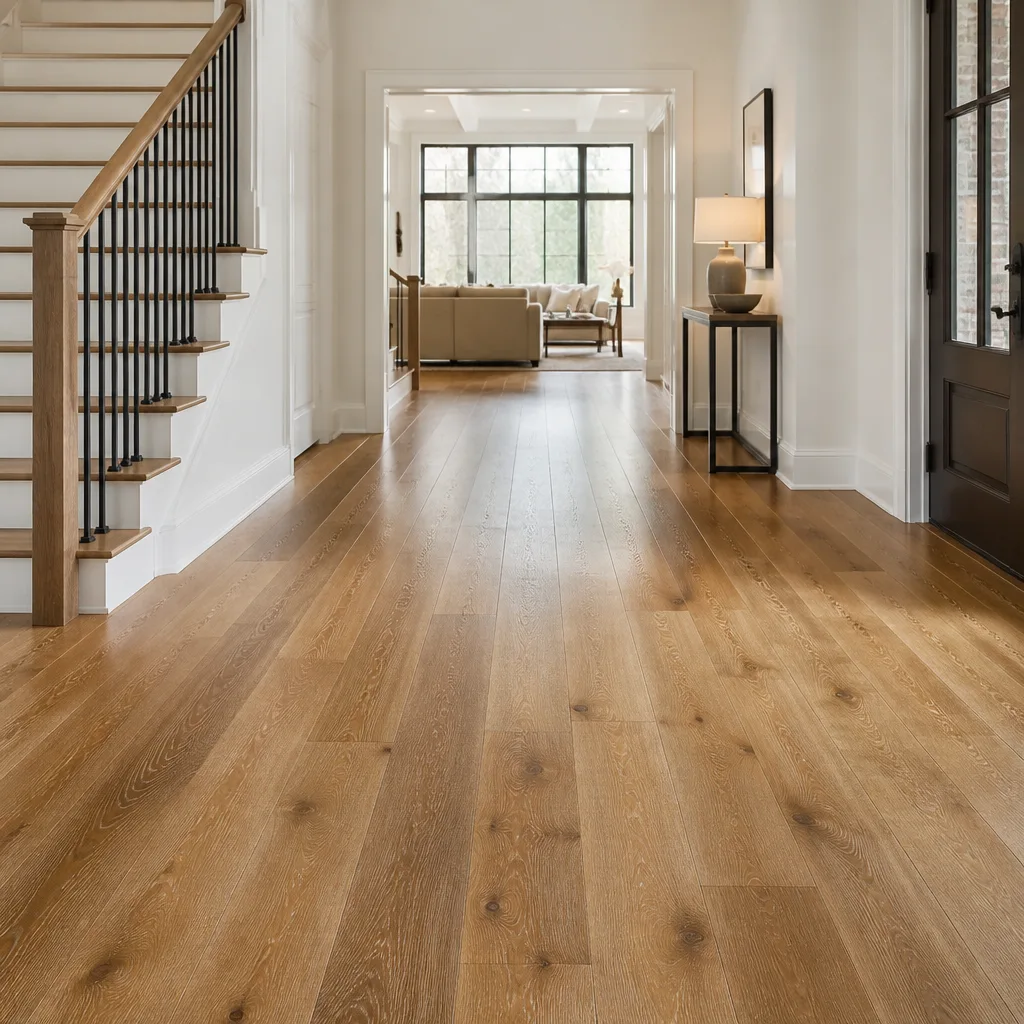 Hardwood
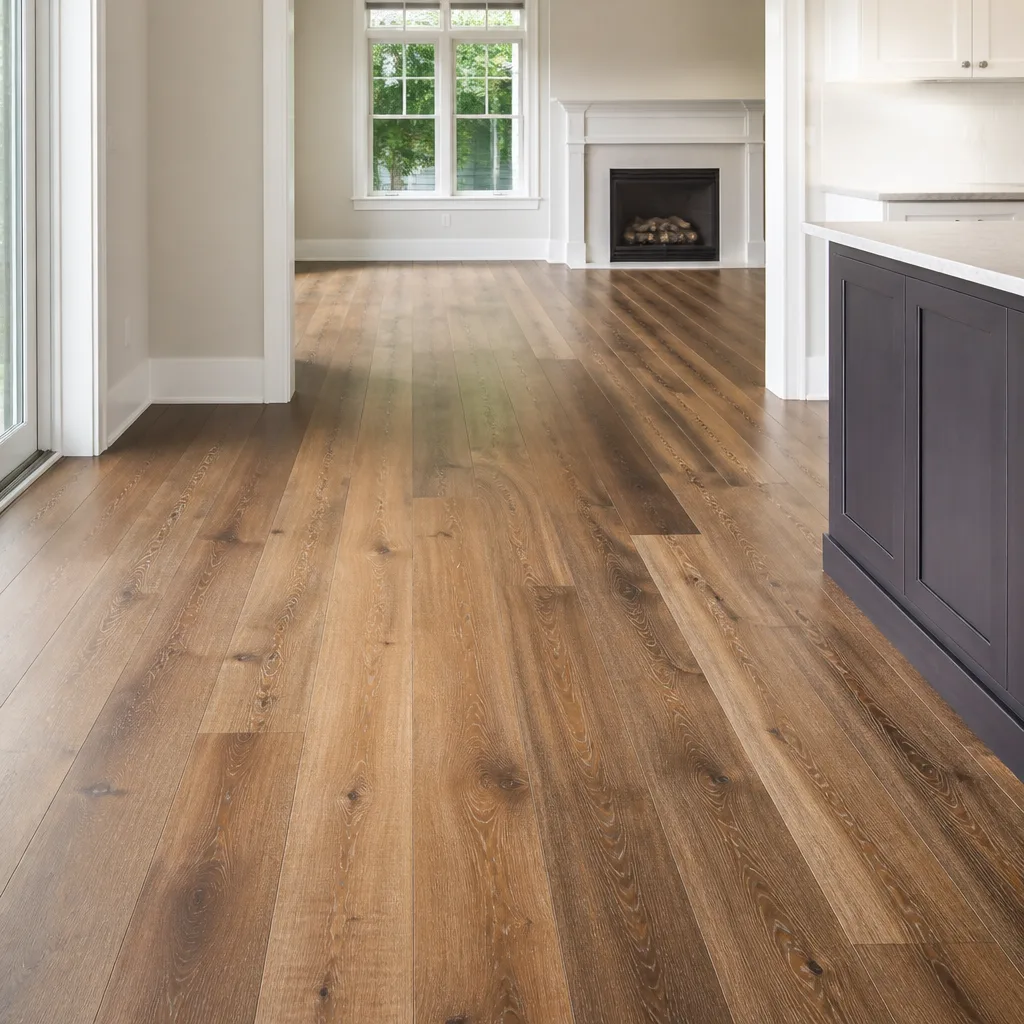 Engineered hardwood
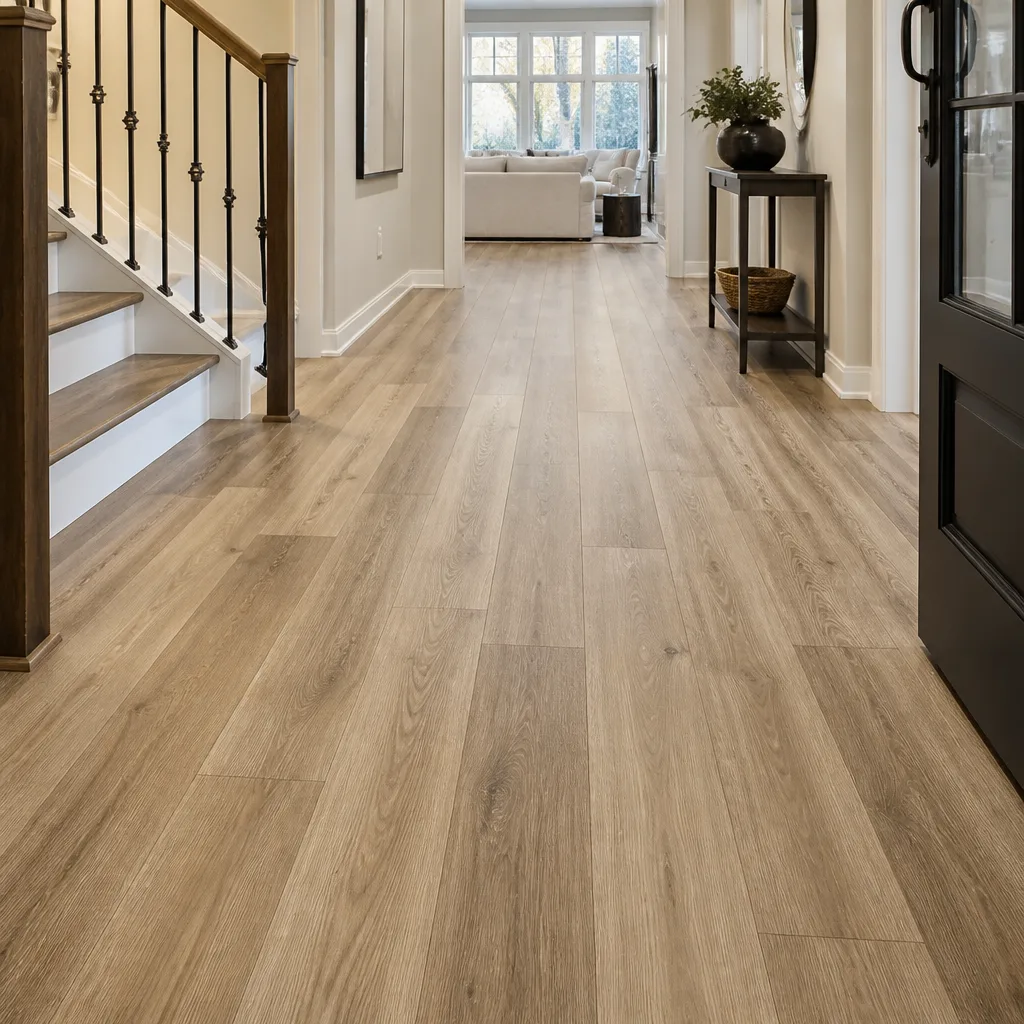 Luxury vinyl plank
 Laminate
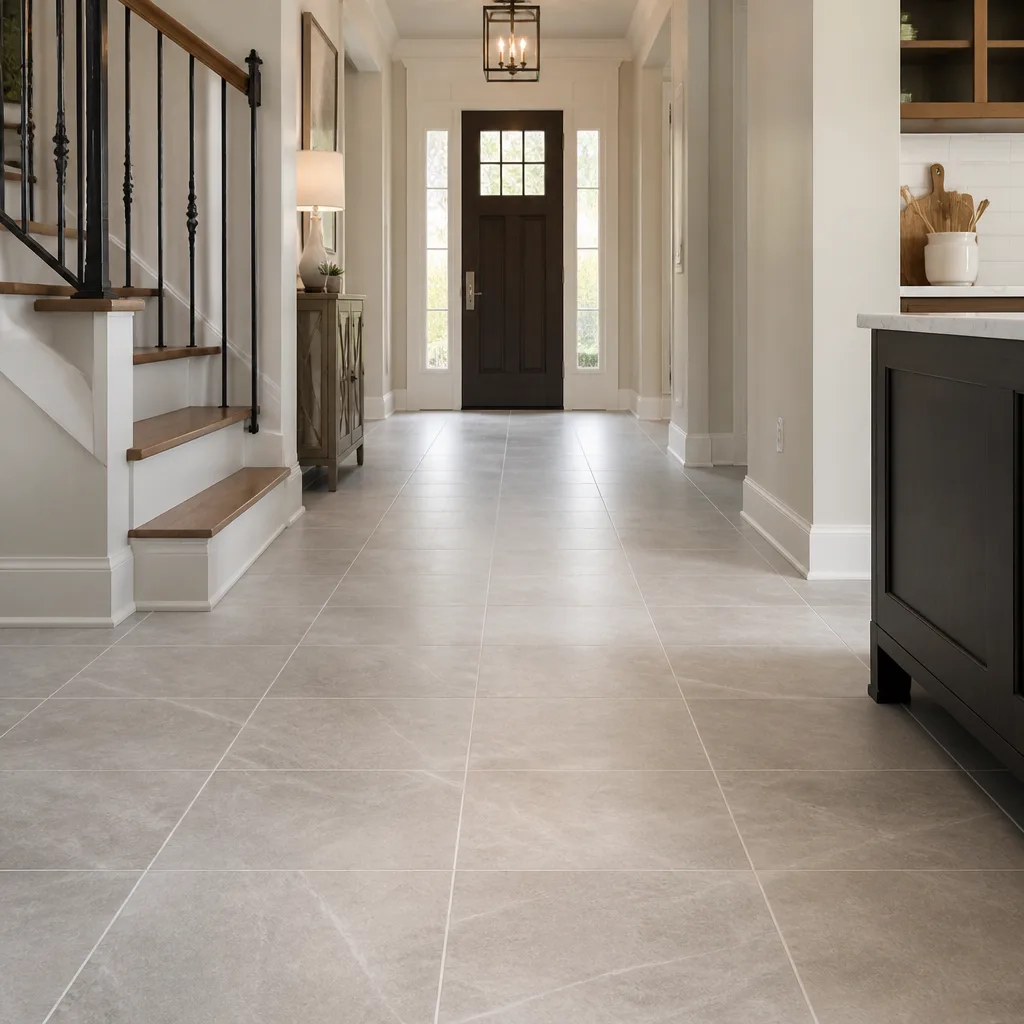 Porcelain tile
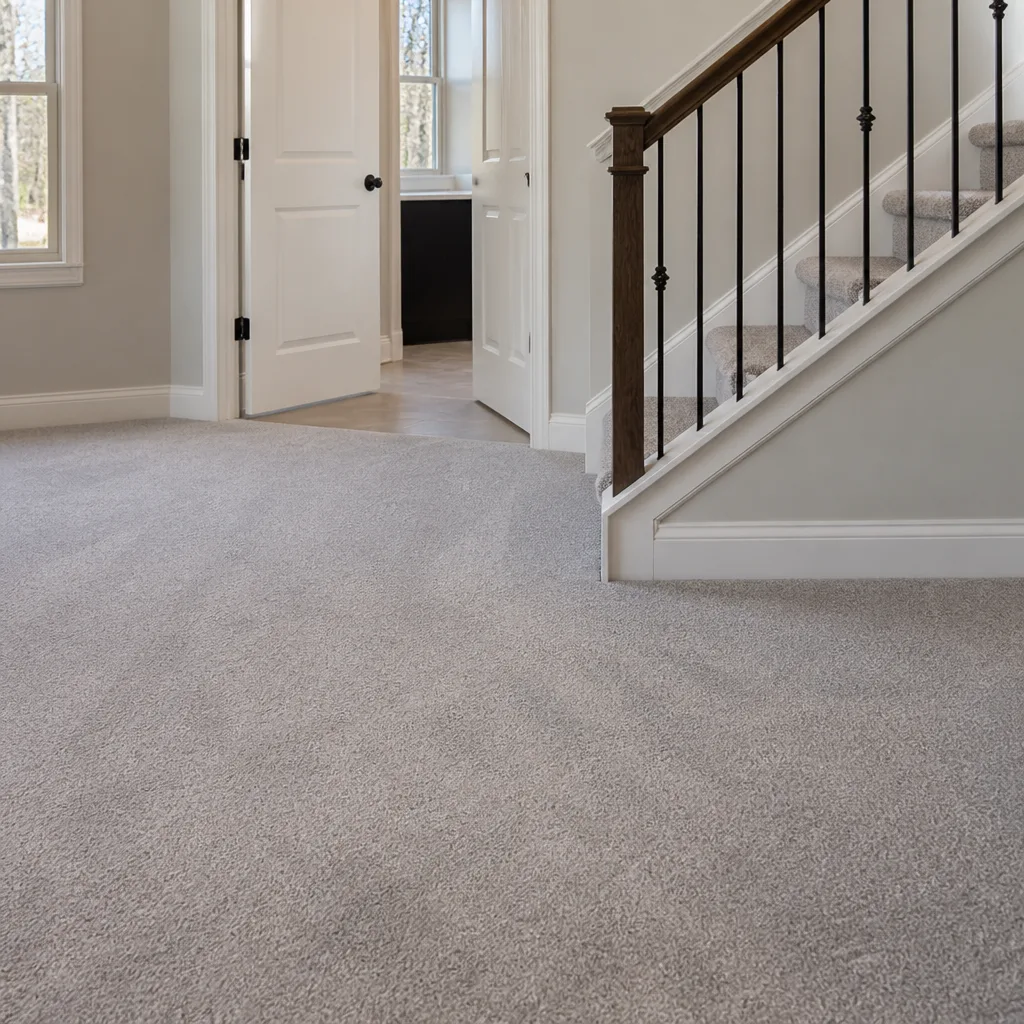 Carpet
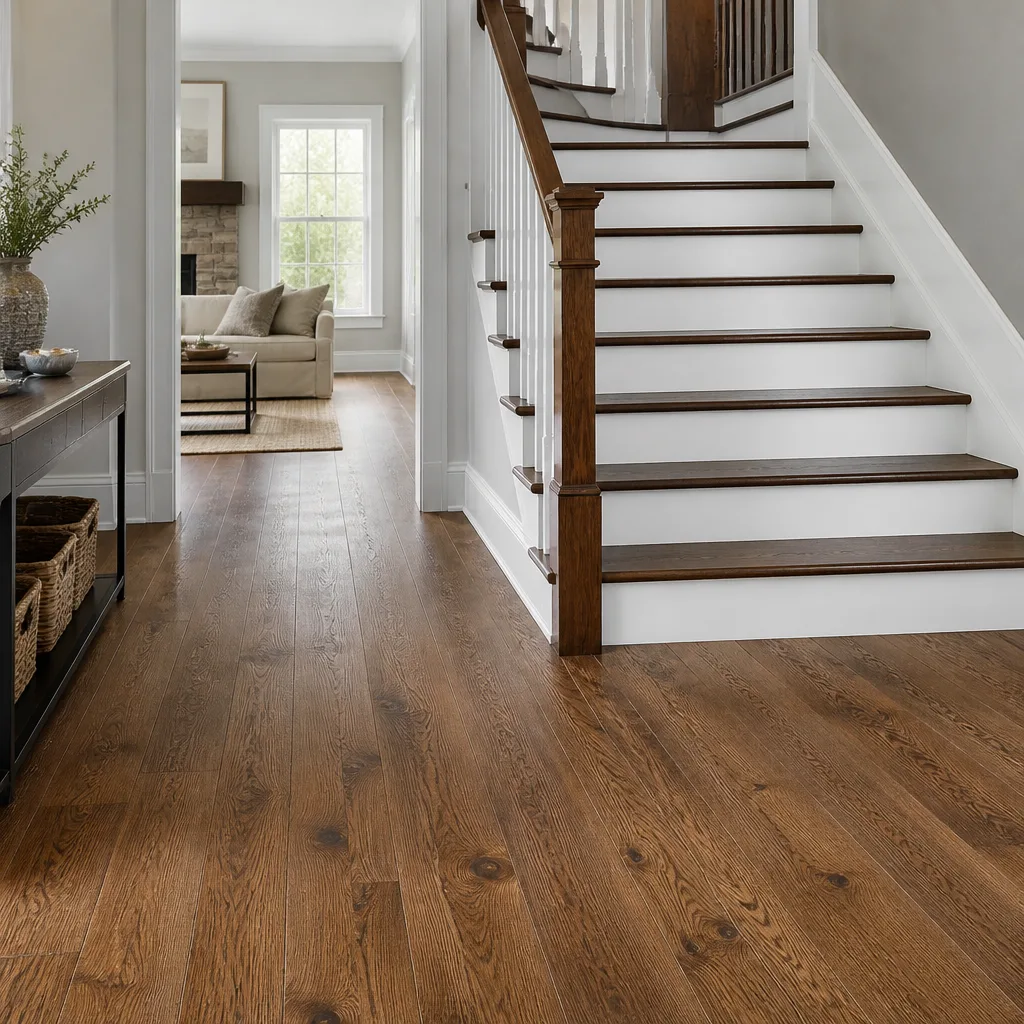 Shaw
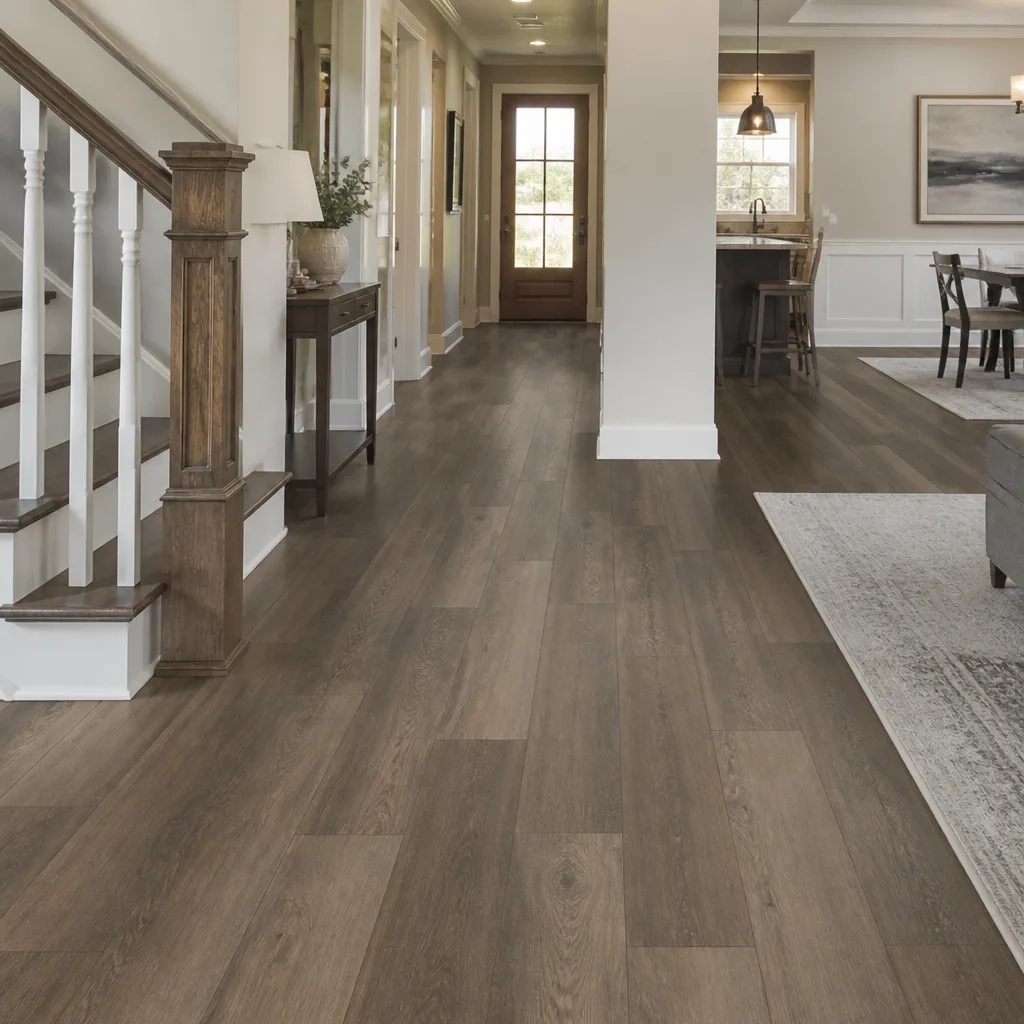 Mohawk
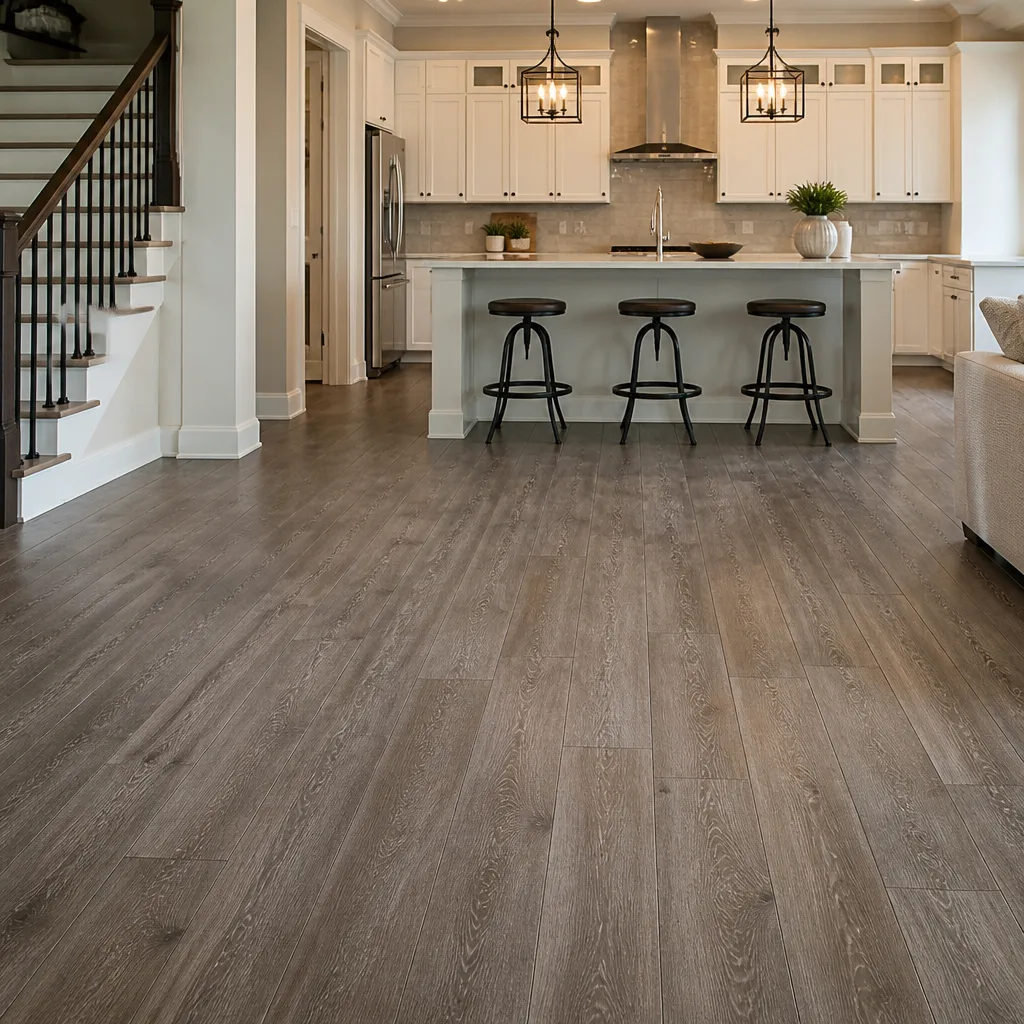 COREtec
 Pergo
Free in-home measure and written estimate: Shaw, Mohawk, COREtec and Pergo lines compared on your own rooms, with carpet, tile, vinyl plank, laminate and hardwood laid out side by side
Get your free estimateFix It or Start Over: Flooring Repair vs Replacement
A patch job on buckled hardwood can look like the cheap way out and still turn into a full replacement within a year if nobody checked what caused the buckle. That’s the trap. Most homeowners decide repair versus replacement by staring at the surface damage, when the real answer sits underneath the floor. We’re a flooring specialist in Enterprise, and we’ve watched plenty of smart people spend money twice because the first fix treated a symptom. In this guide you’ll learn a bottom-up way to read your floor: which damage is genuinely local and fixable, which damage is a signal that the whole assembly is failing, how age and discontinued product lines change the math, and where hardwood refinishing lands as a third option that beats both repair and replacement.
Quick Answer
Repair is usually the right call when the damage is isolated and the subfloor is sound: one cracked tile, a single stain, a small gouge, a loose plank in an otherwise flat floor. Replacement is usually the right call when the damage is a pattern rather than a spot, meaning widespread cupping, soft or spongy spots, or grout that crumbles along the same lines across a whole room. Hardwood refinishing often beats both when the wood is thick enough to sand and the wear is surface-level rather than structural. The only way to know which camp you’re in is to check the subfloor and the moisture picture first, not the surface.
Key Takeaways
- Surface damage is often a symptom. Subfloor condition and moisture decide repair versus replacement.
- Isolated damage: repair. Patterned damage: investigate the whole assembly.
- Discontinued tile, carpet dye lots, and old hardwood profiles limit repair feasibility more than cost does.
- Refinishing is a real third option for hardwood when the wood is thick enough and the boards are sound.
- Get a written estimate that separates diagnosis from pricing, so you know what’s actually failing.
Styles & brands we work with
- Hardwood
- Engineered hardwood
- Luxury vinyl plank
- Laminate
- Porcelain tile
- Carpet
- Shaw
- Mohawk
- COREtec
- Pergo
Table of Contents
- Why You Should Read Your Floor From the Bottom Up
- Damage That’s Genuinely Repairable
- Damage That Signals Systemic Failure
- How Age and Discontinued Products Change the Decision
- The Real Cost Calculation: Repair vs. Depreciated Value vs. Replacement
- Hardwood Refinishing: The Third Option
- A Step-by-Step Diagnostic Process
- Common Mistakes to Avoid
- When to Call a Professional
- Frequently Asked Questions
- The Bottom Line
Why You Should Read Your Floor From the Bottom Up
The mistake almost everyone makes is to treat the floor as a single visible surface. It isn’t. What you walk on is the top layer of a stack: the finished floor, the underlayment or mortar bed, and the subfloor that ties it all to the structure of the house. Damage that starts at the top can often be fixed at the top. Damage that starts in the stack below almost never can.
In Enterprise, we deal with a specific pressure that pushes subfloor problems into the picture: the desert swings between dry heat and cooler nights, and indoor humidity moves around a lot depending on how a home is cooled, how it’s sealed, and how plumbing behaves. Wood and wood-based floors take on and give off moisture as humidity shifts. Tile and grout are rigid and don’t forgive movement. Carpet hides moisture for a long time before you see it. That’s why a bottom-up read matters here. When we assess a floor, we look at these layers in order:
- The subfloor itself. Is it flat, dry, and firm, or does it flex, dip, or feel soft underfoot?
- The moisture picture. Is there a source? A slow leak, a slab that stays damp, or a room where humidity runs high?
- The underlayment or bed. For tile, is the mortar bed intact? For wood, is the underlayment sound?
- The finished surface. Only now do we judge the visible damage, because the surface tells us what happened below it.
If you flip that order, you end up repairing the visible spot and paying for it again when the cause reasserts itself. That’s the whole thesis of this guide. At Floors Enterprise, we diagnose from the bottom up before we quote a single line item.
Damage That’s Genuinely Repairable
Repairable damage shares three traits: it’s isolated, the subfloor beneath it is sound, and matching material is available. When all three line up, a targeted repair is the right call and replacement is money you don’t need to spend.
Here’s what falls into the repairable bucket:
- A single cracked or chipped tile in an otherwise flat, stable floor. One bad tile usually means impact, not a failing bed.
- An isolated stain in carpet, especially one you can identify (spilled drink, pet accident, tracked-in mud) and that hasn’t spread.
- A small gouge or scratch in hardwood where the boards are still flat and the damage is surface-level.
- A single loose or lifted plank that can be re-seated without disturbing its neighbors.
- A popped or hollow-sounding tile with no surrounding pattern of hollowness.
Notice the pattern. Every item on that list is a spot. The repair is scoped to that spot, and we can verify the subfloor under it is sound before touching it. If we can’t verify that, the repair isn’t repairable yet, it’s camouflage.
For carpet installation and repair, the isolation test is the big one. A single stain or a small pulled seam is fixable. A stain that keeps reappearing in the same area after cleaning usually means moisture is wicking up from below, and no amount of cleaning fixes that. Carpet is honest about moisture once you know where to look. It also hides it well, so a trained eye checking under the carpet is worth more than a bottle of cleaner.
For tile flooring installation, an isolated cracked tile is a spot repair. That said, when we pull that tile we look at the bed of mortar under it. If the thinset is bonded and the subfloor is solid, we replace the tile. If the bed comes up loose, the crack was a symptom, and the next tile to go will be a neighbor.
Damage That Signals Systemic Failure
Systemic damage is patterned. It repeats across a room, follows a line, or shows up in multiple rooms that share a subfloor. When you see these, the repair decision changes. Patching the visible spot buys time but not a fix.
Watch for these signals:
- Widespread cupping in hardwood, where board edges curl up across an area. Cupping points to moisture imbalance, not to wear.
- Soft or spongy spots anywhere on the floor that flex under weight. That’s subfloor trouble.
- Grout that crumbles in a repeating pattern, often along a straight line or in a grid. A single cracked grout line is cosmetic. A pattern says the floor is moving.
- Bubbling or lifting of a laminate or vinyl surface across a large area.
- Hollow-sounding tile across a large area, not just one or two.
- Repeated stains or musty smell in the same zone after cleaning.
Here’s the important thing about the desert: cupping, soft spots, and repeated moisture aren’t only a wet-climate problem. A slow supply-line leak, an AC condensate issue, or a room where the humidity is trapped can push enough moisture into a floor assembly to cause real damage. When it happens, the floor is telling you where to look, and it’s usually below the surface.
When damage is patterned, a professional diagnostic visit is worth more than any patch. The fix isn’t “replace the damaged boards,” it’s “find and stop the source, then repair or replace the affected assembly.” If you only do the first part, the second part comes back. In Enterprise, we’ve seen this exact loop play out in homes with slab foundations where a hairline plumbing issue went unnoticed until the floor told on it.
How Age and Discontinued Products Change the Decision
Here’s a factor most guides skip: even a perfectly repairable spot can become a full replacement for a boring reason. The material is no longer made.
Three things get hard to match as a floor ages:
- Tile. Tile styles and colors come and go. A tile from fifteen years ago is often out of production, and a close color match is still a visible patch, because the light hits it differently and the nominal size isn’t quite the same.
- Carpet dye lots. Carpet is dyed in lots. Two rolls of the same style, dyed at different times, can look different side by side. A patch using new carpet in the middle of an old field is usually visible, even when the style number matches.
- Hardwood profiles. Board widths, tongue-and-groove profiles, and milling change. A board from an old mill may not exist anymore in the same profile.
None of these means the repair is impossible. It means the repair comes with a visual seam. Some homeowners are fine with that, especially under furniture or in a low-traffic corner. Others aren’t, and that preference is as legitimate as any technical factor.
This is where working with one specialist across multiple brands pays off. At Floors Enterprise we carry and install Shaw, Mohawk, COREtec, Pergo, LifeProof, Mannington, Armstrong, Daltile, and Karndean, so when a discontinued product forces a decision, we can walk you through the replacement lines that come closest in look and performance. Rather than running between stores trying to match a fifteen-year-old tile, you compare options with one specialist. The Enterprise homeowner we talk to usually ends up glad they didn’t spend weeks chasing a patch that was never going to look invisible.
The Real Cost Calculation: Repair vs. Depreciated Value vs. Replacement
Repair vs. replacement is usually framed as a simple price comparison. It’s not, because a repair on an old floor buys you time on a floor that’s already depreciated. The honest math has three numbers.
Number one: repair cost. A targeted repair is usually the smallest line item. It buys you the specific fix, plus whatever life the rest of the floor still has.
Number two: depreciated value of what’s already there. Factor in the floor’s age, wear, and remaining useful life. A repair is only a good deal if there’s meaningful life left in the rest of the floor. If most of it is already near the end of its service life, a repair is putting fresh money into a floor you’ll replace soon.
Number three: replacement cost with longevity factored in. Replacement has a bigger upfront number, but it resets the clock and usually includes new underlayment or prep that fixes the underlying condition. Divide the total by the years of new life and the number can look less dramatic than the sticker price suggests.
Here’s how to weigh it:
- Estimate the repair. Get a written estimate that lists the specific repair and includes any prep the technician needs.
- Estimate the remaining life. Ask directly: how many good years does the rest of the floor have?
- Estimate the replacement. Get a second written estimate for the whole room, including prep and removal, if a full replacement is on the table.
- Compare cost-per-year, not cost-per-job. Repair cost divided by remaining years of the current floor vs. replacement cost divided by expected years of the new floor.
There’s a second calculation worth doing: repair + repair + repair. If you’re looking at a fourth targeted repair on a floor that’s already been patched three times, the math usually flips. A repair that fixes the same problem repeatedly isn’t a repair, it’s a subscription. When you see that pattern, replacement is generally the more honest number.
Every estimate we write for a home in Enterprise is free, written, and itemized. The final price is set by that written estimate, not by a phone number. We’d rather you know exactly what you’re comparing before you decide.
Hardwood Refinishing: The Third Option
For hardwood, there’s often a third path that beats both patching and replacing. Refinishing sands the existing boards down to fresh wood and applies a new finish, restoring the surface while keeping the original floor.
When refinishing is the right call:
- The damage is surface-level (scratches, worn finish, dull traffic lanes, isolated light stains), not structural.
- The boards are flat and dry, with no widespread cupping or soft spots.
- The wood is thick enough to sand again, which is checked at the estimate visit.
- The floor has enough life left to justify the refinish, rather than being near the end of its usable thickness.
When refinishing isn’t the right call:
- The floor is cupped, has soft spots, or shows signs that moisture is still active.
- The boards are too thin to sand again. We can’t tell you that over the phone; it’s a physical check.
- A specific deep stain has penetrated past what sanding can reach.
We treat hardwood refinishing as its own craft, not as a fallback. It’s the restore-before-you-replace option, and it’s the one a lot of flooring retailers simply don’t offer. Keeping an existing floor out of a landfill and keeping your money in your pocket aren’t mutually exclusive. In Enterprise, hardwood refinishing is one of the three services we specialize in, alongside carpet and tile, so the recommendation comes from the same place as the rest of the work, not from a sales floor that only wants to sell you new material.
One thing we’re careful about: we never promise a specific stain match or that any floor can be refinished. Both depend on the thickness of the wood and its condition, which is why the estimate visit is where those calls get made, not over the phone.
A Step-by-Step Diagnostic Process
If you want to read your own floor before calling anyone, here’s the sequence that matches how we diagnose a job. This is the “what to check” version, not a repair instruction, because the actual fix depends on what you find and it’s often work you don’t want to do yourself.
- Find the pattern. Walk the room and map the damage. Is it a spot, a cluster, a line, or a whole room? Photograph it so you’re not relying on memory.
- Check for flex. Press down with your foot in several spots, especially near walls and plumbing walls. A firm floor and a flexible spot tell different stories.
- Feel for uneven edges. Run your hand across hardwood seams. Cupping and crowning are detectable by feel before they’re obvious to the eye.
- Look for moisture clues. Stains that keep returning, a musty smell, discolored grout, peeling edges near walls, or cupboards that feel damper near the floor. These point below the surface.
- Note the age and product. If you have leftover tile, carpet samples, or a spec sheet, keep it. Matching is faster and more accurate when you know what’s actually installed.
- Get a written diagnosis. A professional assessment backed by a written estimate gives you a real number to compare against a full replacement.
If you’re not comfortable doing the first five checks, that’s fine. A trained technician can run them in a single visit and tell you what’s actually happening. The goal of the session isn’t a repair quote, it’s a diagnosis.
See the difference
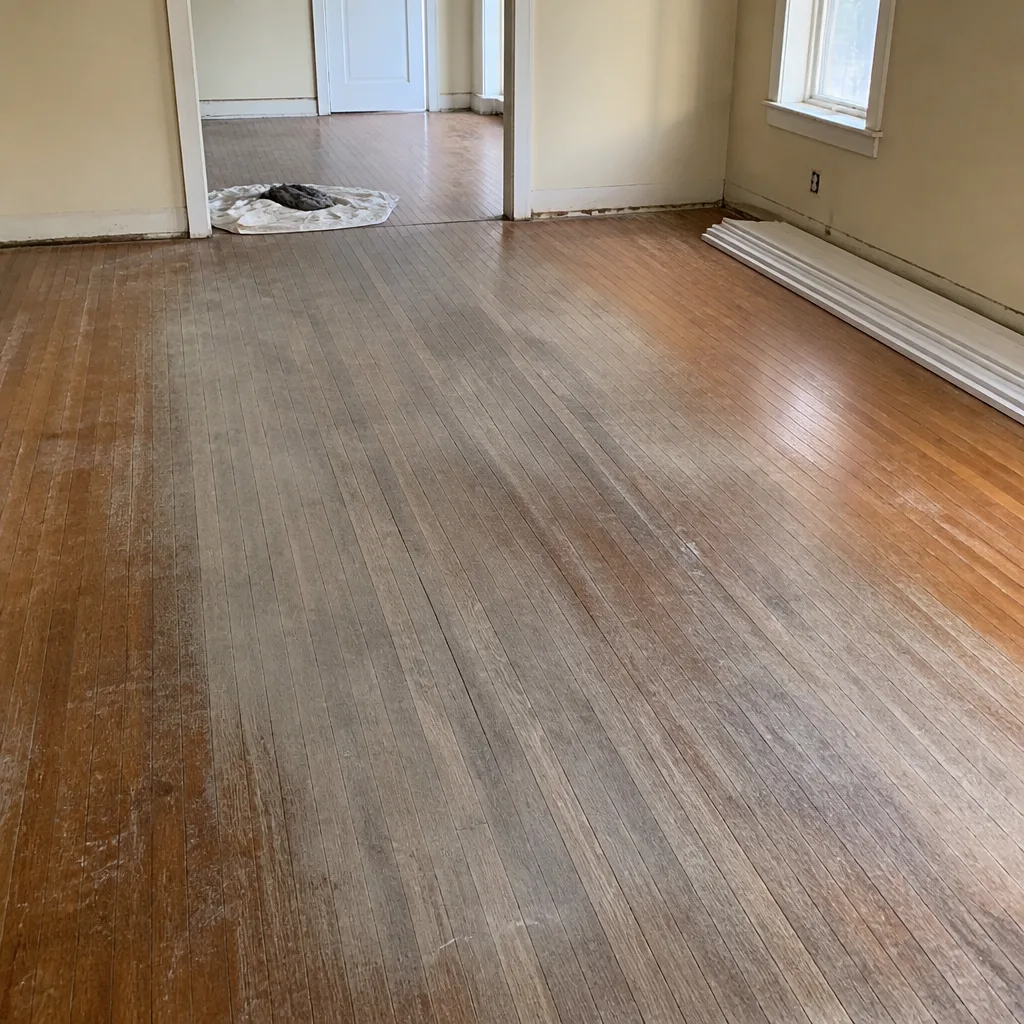 Before
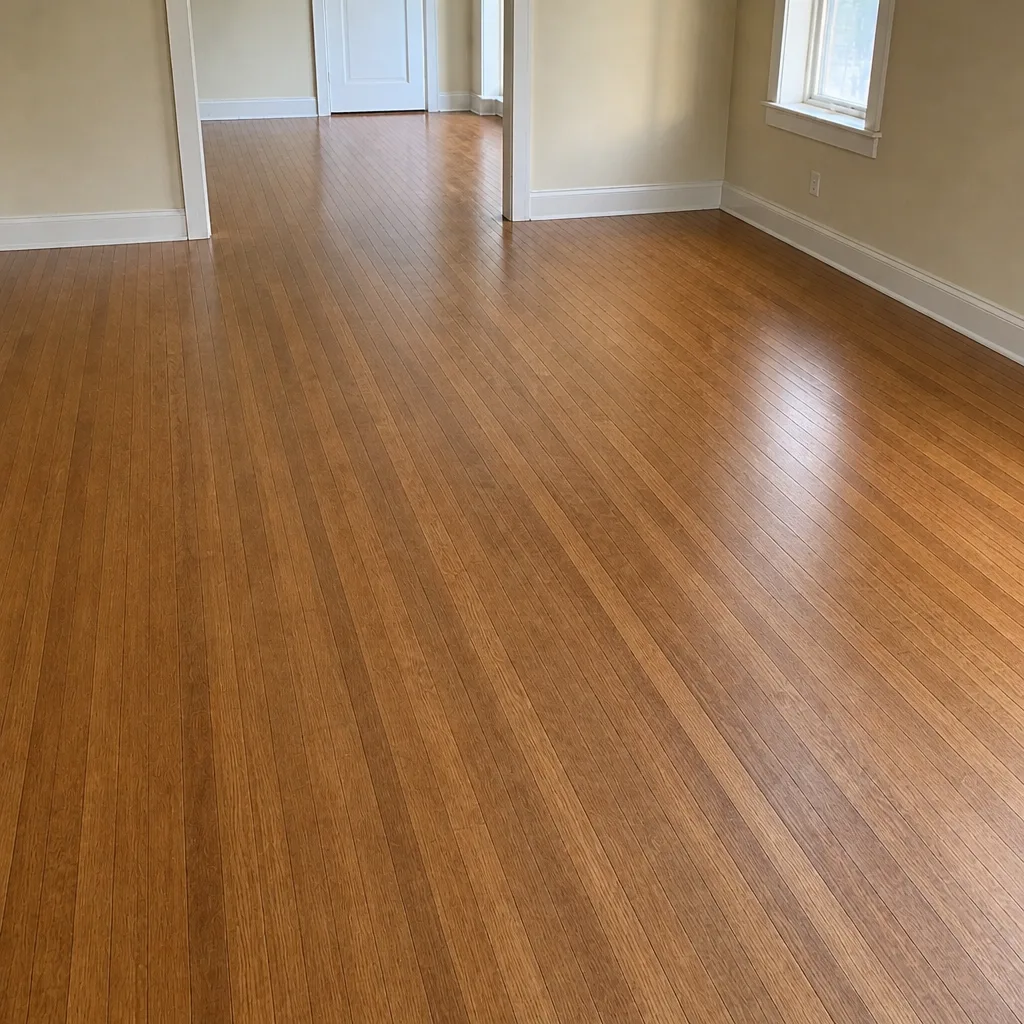 After
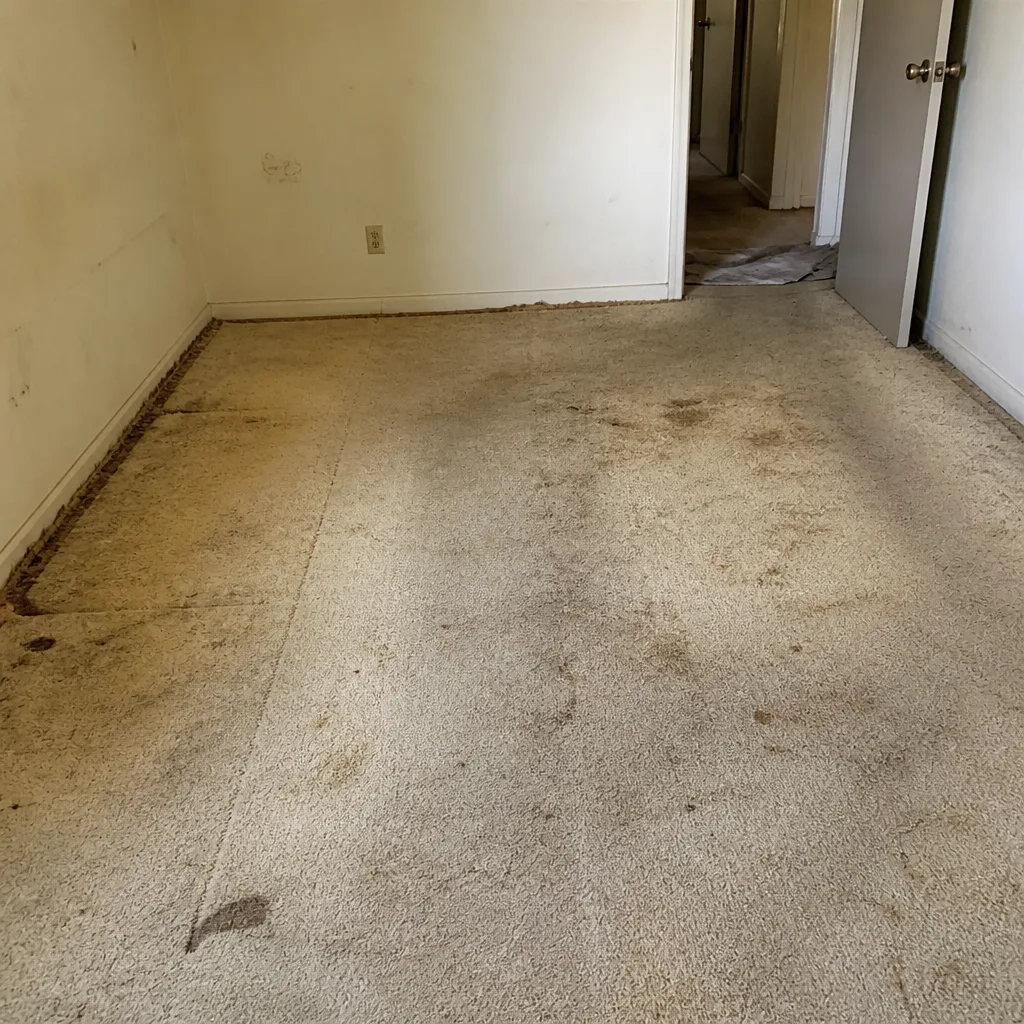 Before
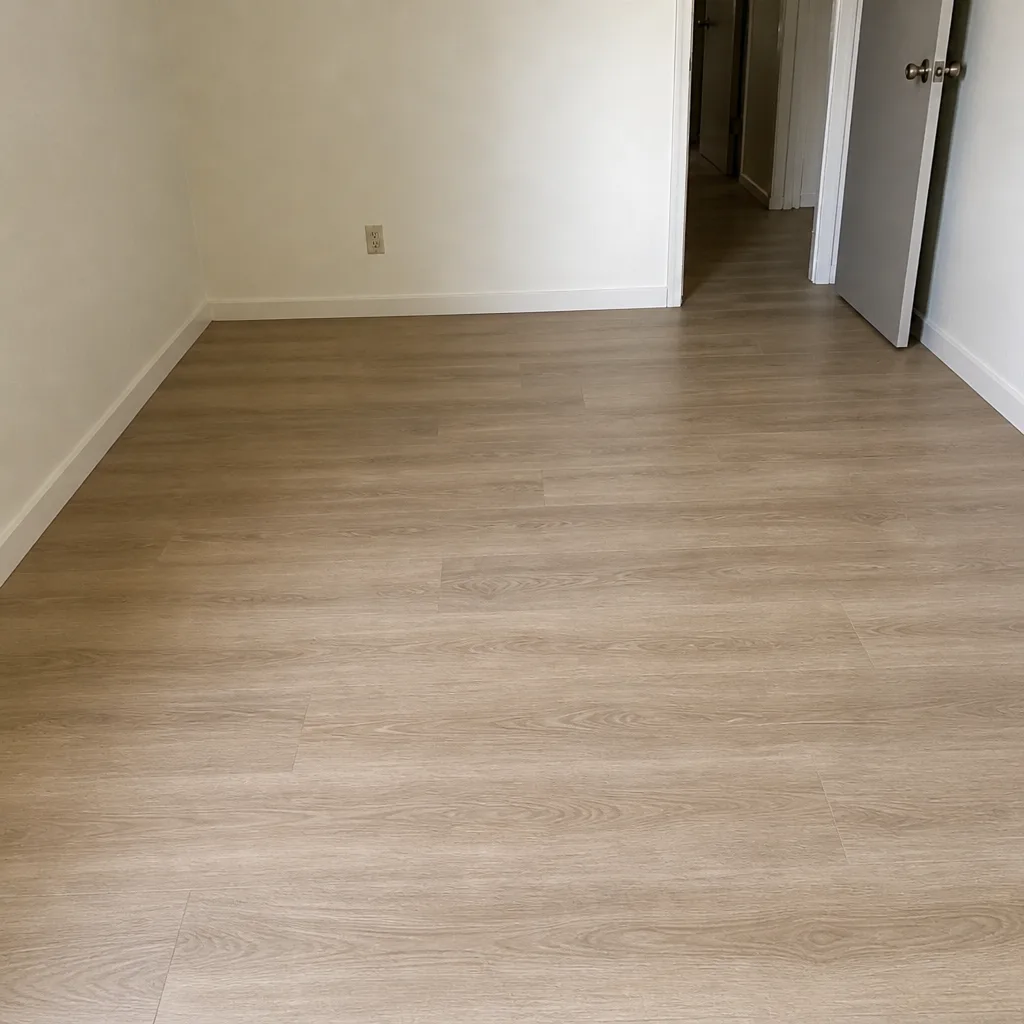 After
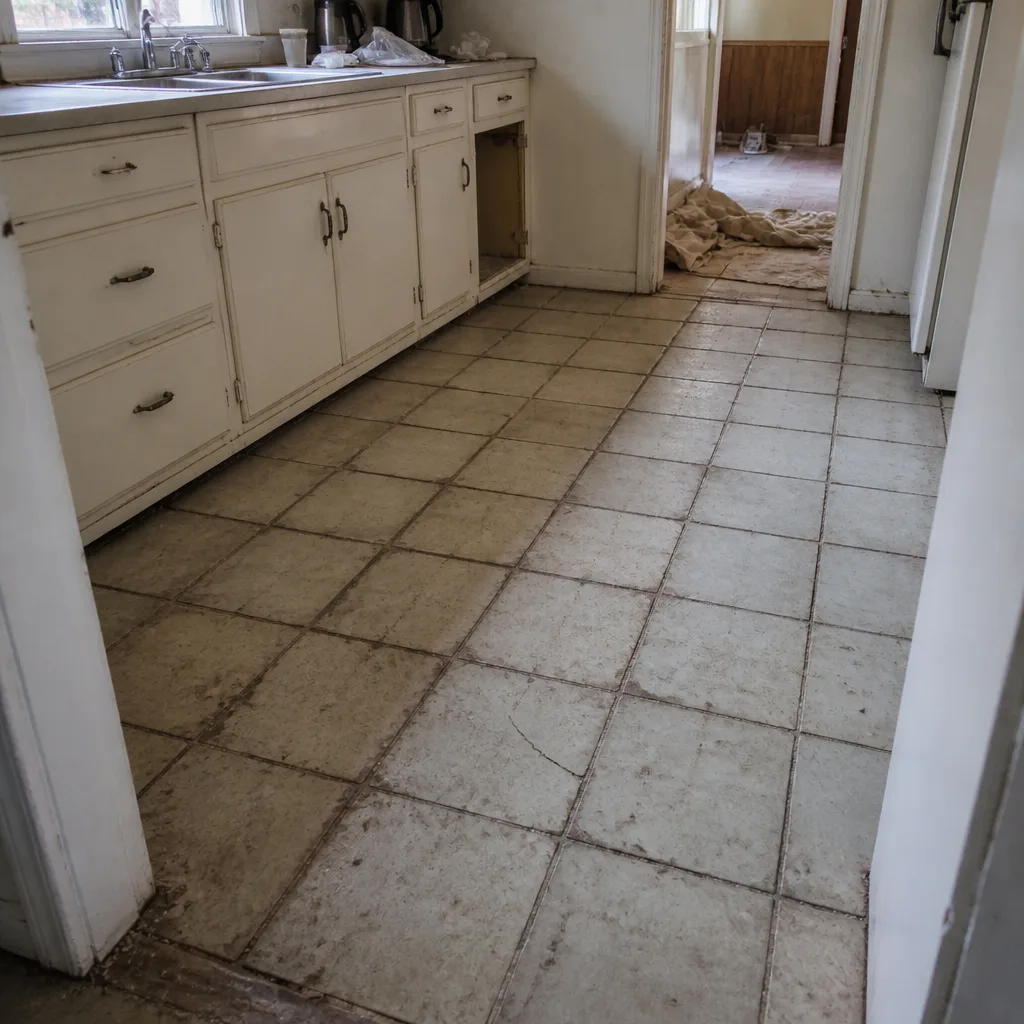 Before
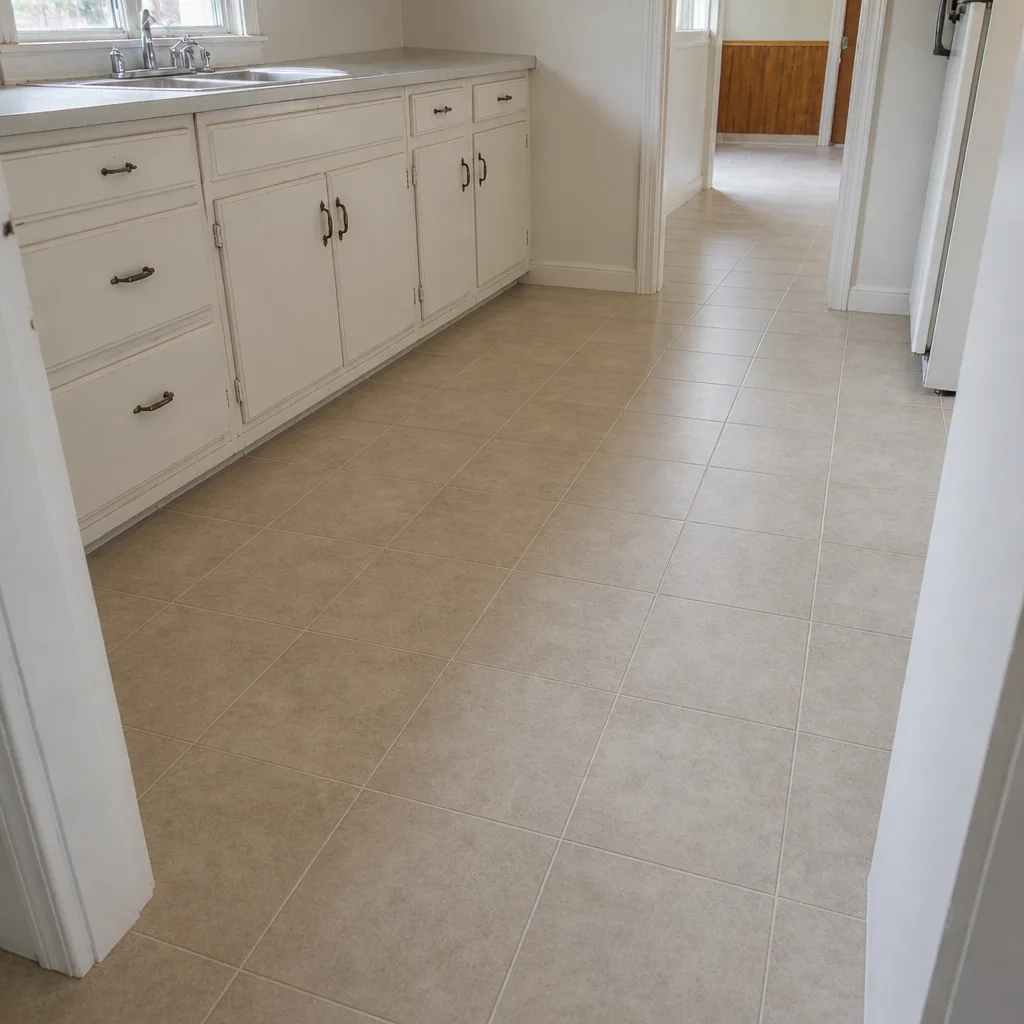 After
Common Mistakes to Avoid
- Treating the surface damage as the problem. Patching a cupped hardwood floor without finding the moisture source is the classic expensive mistake. The patch looks fine for a season and then the same board cups again.
- Assuming the desert means moisture can’t be the cause. A slow leak or trapped humidity can push real moisture into a floor assembly in Enterprise even in dry weather. Cupping isn’t coastal-only.
- Repairing a discontinued material without checking matching first. Costing a repair before you know the tile or carpet can be matched leads to a visible patch you didn’t plan for.
- Skipping the subfloor check on a tile repair. Replacing a single cracked tile without checking the mortar bed is a quick fix that fails on the next crack. Look under the tile before deciding.
- Treating refinishing as a last resort. Reach for it as a first option on worn but sound hardwood, not as a fallback after the floor has failed.
- Comparing a repair quote against a replacement quote on different scopes. One estimate including subfloor prep and one not including it can’t be compared. Compare the whole job.
- Burying the real decision in a phone call. The written estimate is where the diagnosis and the price live. Get it in writing so the math is honest.
When to Call a Professional
Some situations are worth a call without waiting. Cupping across a room, a floor that flexes underfoot, grout that crumbles in a pattern, a stain that keeps returning after cleaning, or a tile that has started to pop and lift all point to something below the surface. So does a hardwood floor that is too thin to sand or has a moisture problem you can’t pin down. In any of those cases, a trained eye saves you money by getting the diagnosis right the first time rather than paying twice for the same symptom.
Floors Enterprise offers free estimates in Enterprise, and every diagnosis comes with a written, itemized price for whatever comes next. We install and service the floor across the nine brands we carry, and our technicians have up to 9 years of experience reading floors from the bottom up. Call (844) 320-5894. We answer 24/7. Fast dispatch from 7am to 7pm, Sunday through Friday.
Frequently Asked Questions
Repair is typically the smaller number per job because it’s scoped to the specific damage, while replacement is priced for the whole room and usually includes subfloor prep and removal of the old surface. Because repair cost, the floor’s remaining life, and the particular material are all different from home to home, a written estimate is the only reliable way to compare the two. A free estimate lets you put a real number on both options in the same visit. Call (844) 320-5894 for an exact quote, estimates are free.
Usually not until the moisture source is found, because cupping is a signal of moisture imbalance in the wood or in the assembly below it. Patching cupped boards without fixing the cause typically leads to the same failure coming back. The right first step is to diagnose the moisture picture, then decide between refinishing (if the boards are thick enough and sound), repair (if the cupping is limited and the cause is corrected), and replacement (if the floor has already lost most of its useful life). Call (844) 320-5894 to schedule a diagnostic estimate.
Sometimes, but there’s no guarantee. Tile styles get discontinued, and carpet is dyed in lots, so a patch can look different from the original even when the style number matches. When a match can’t be found, we can walk you through current alternatives in the brands we carry, including Daltile and Shaw, so you compare options in a single place instead of running between stores. An estimate visit is the fastest way to know what’s available. Call (844) 320-5894 to book a free estimate.
Refinishing is generally the better option when the damage is surface-level (scratches, worn finish, dull traffic lanes) and the boards are flat, dry, and thick enough to sand again. It beats both repair and replacement in that scenario because it preserves the existing floor and addresses the whole surface at once. Whether your specific floor qualifies depends on the thickness of the wood and its condition, which is checked at the estimate. Call (844) 320-5894 for a free refinishing estimate.
No, a single cracked tile in an otherwise stable floor is usually a spot repair, and we’d check the mortar bed under that one tile during the visit. If the bed and subfloor are sound, the repair is straightforward. If the crack is part of a wider pattern of hollow-sounding tiles or crumbling grout, that’s a sign the bed or subfloor is failing, and a broader fix is often the more honest recommendation. Call (844) 320-5894 to have it looked at and priced.
We’re a flooring specialist, not a retail store, so the work is diagnosis, material selection help, and professional installation across the brands we carry: carpet, tile, and hardwood refinishing. We install and service the floor you choose and walk you through which product fits how you actually live, whether that’s a water-resistant LVP like COREtec for a busy household or a design-forward tile from Karndean. An estimate is the place to compare your options. Call (844) 320-5894 to schedule it.
The Bottom Line
The repair-versus-replacement decision isn’t a math problem, it’s a diagnostic one. Read the floor from the bottom up: check the subfloor and moisture picture first, then judge the surface. Isolated damage with a sound floor usually means repair. Patterned damage points to the assembly below and often means a broader fix or full replacement. Price in the age of the floor and the availability of matching tile, carpet, or hardwood, because a perfect repair can still be the wrong call if the material is discontinued. And for hardwood, put refinishing on the table before you consider replacing. If you’re in Enterprise and want a proper diagnosis before you spend, call (844) 320-5894. We answer 24/7. Fast dispatch from 7am to 7pm, Sunday through Friday, and the estimate is free.
Written by the team at Floors Enterprise.