
Last updated November 18, 2026
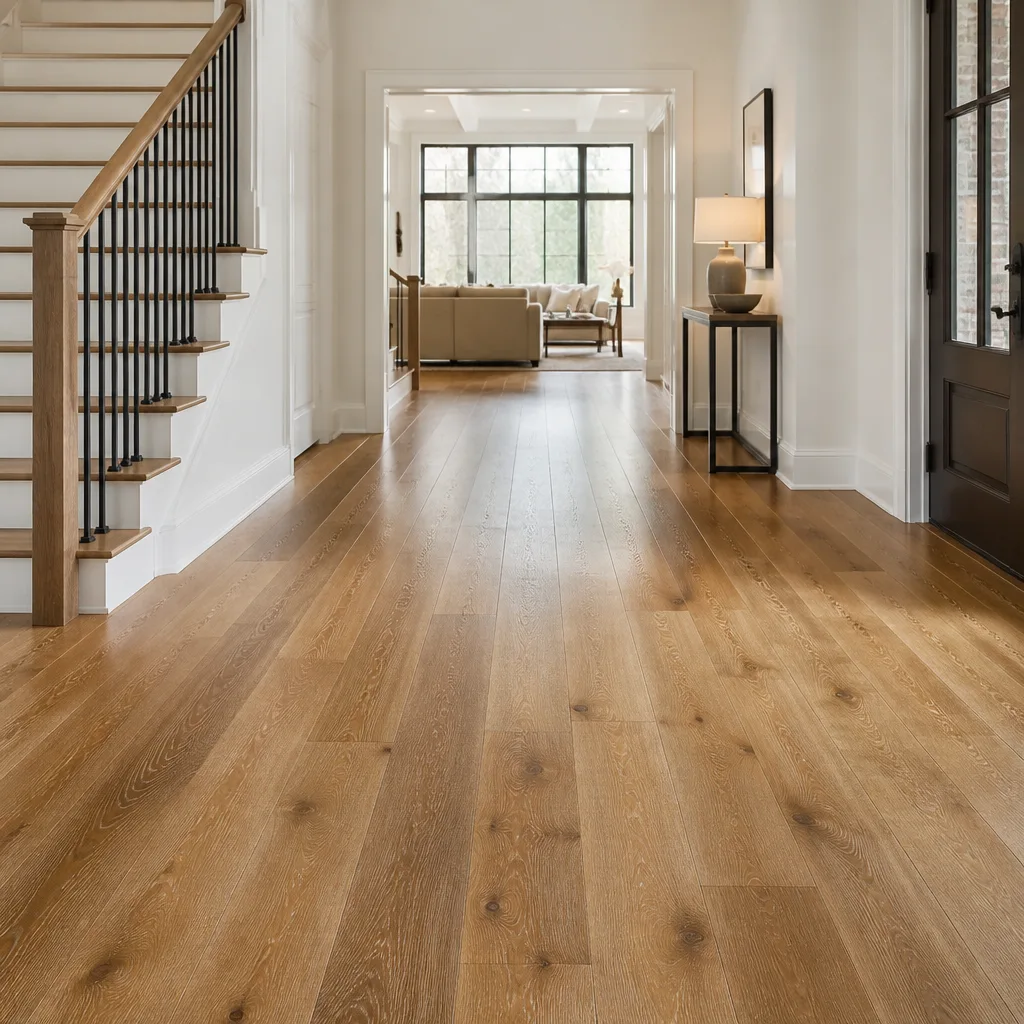 Hardwood
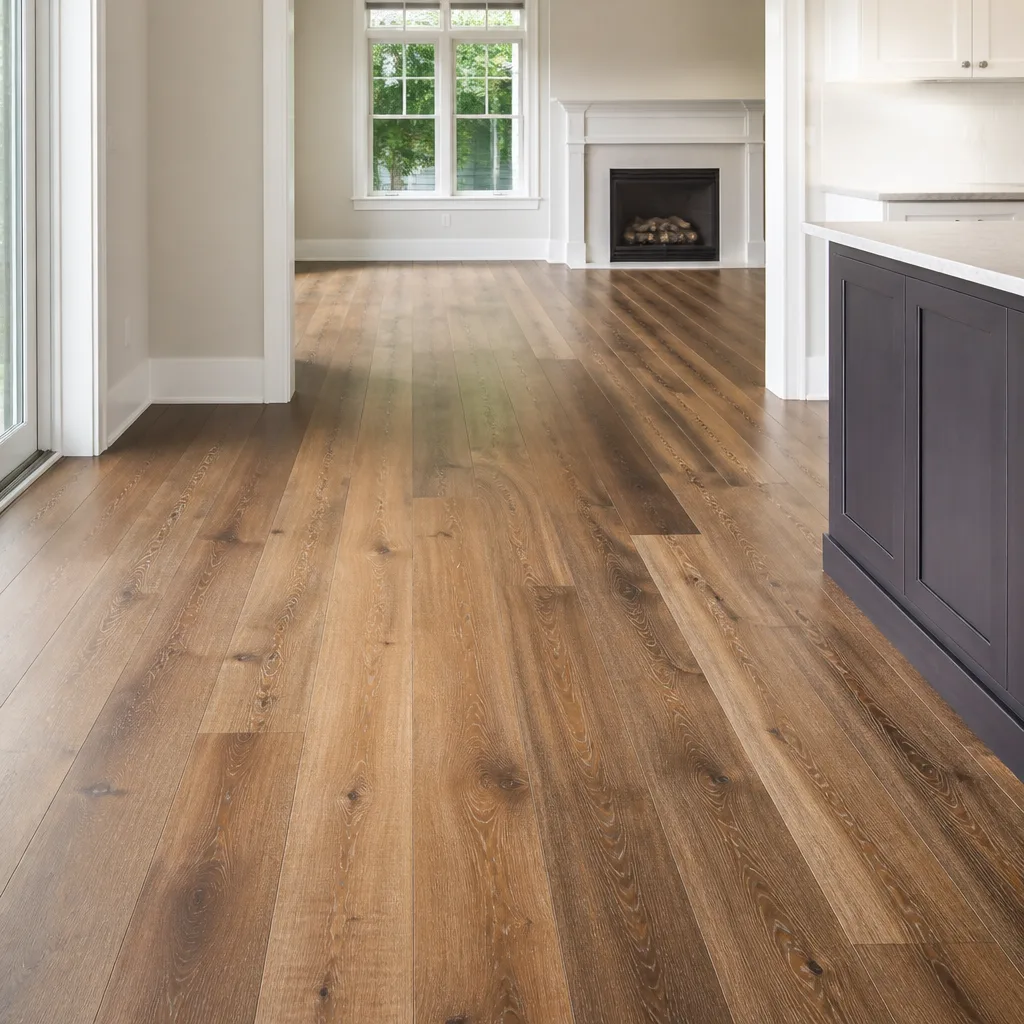 Engineered hardwood
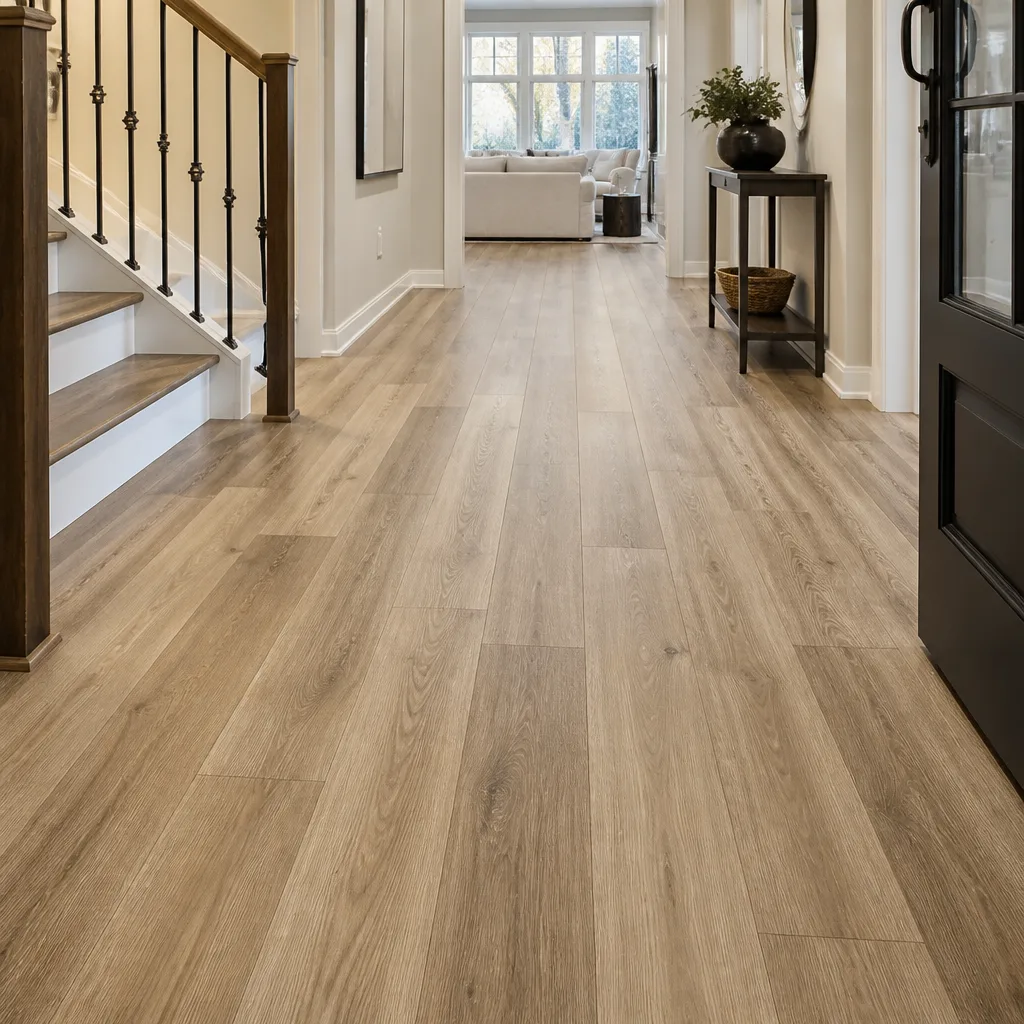 Luxury vinyl plank
 Laminate
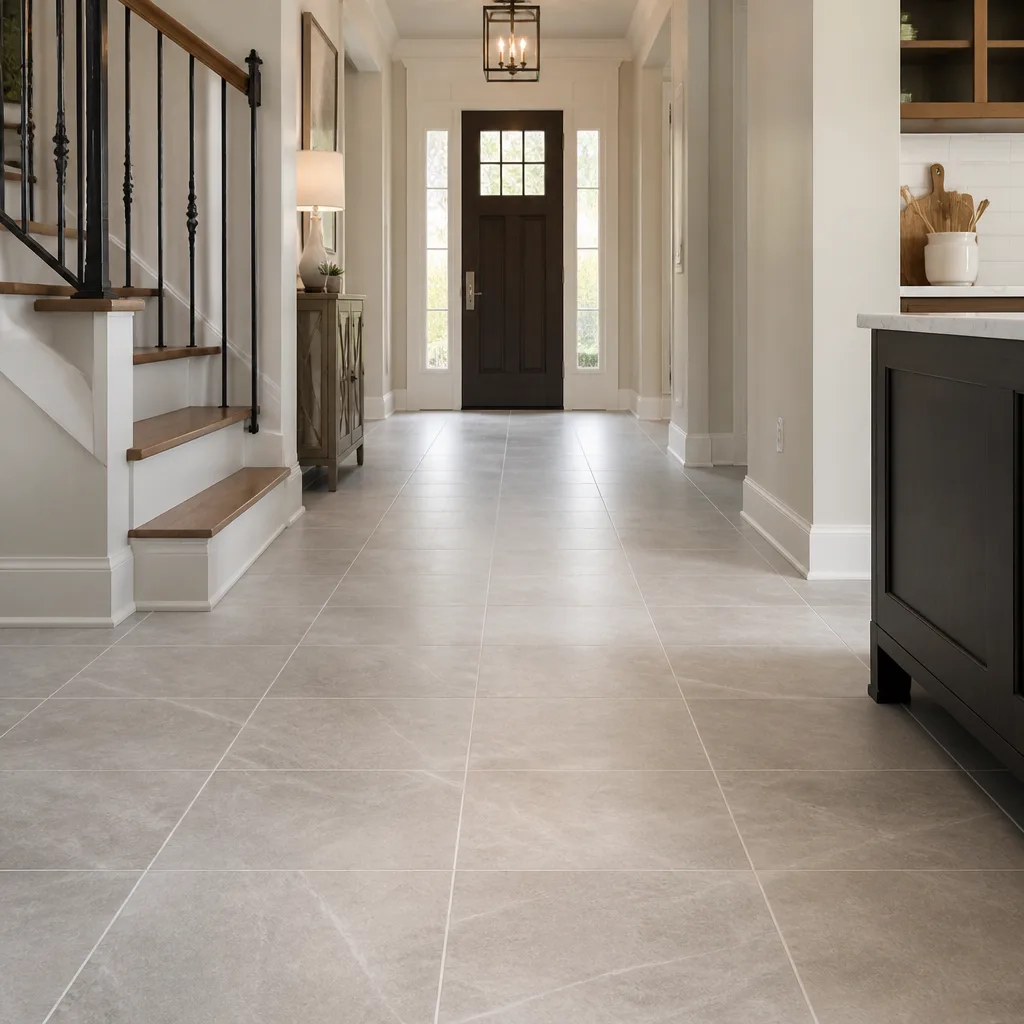 Porcelain tile
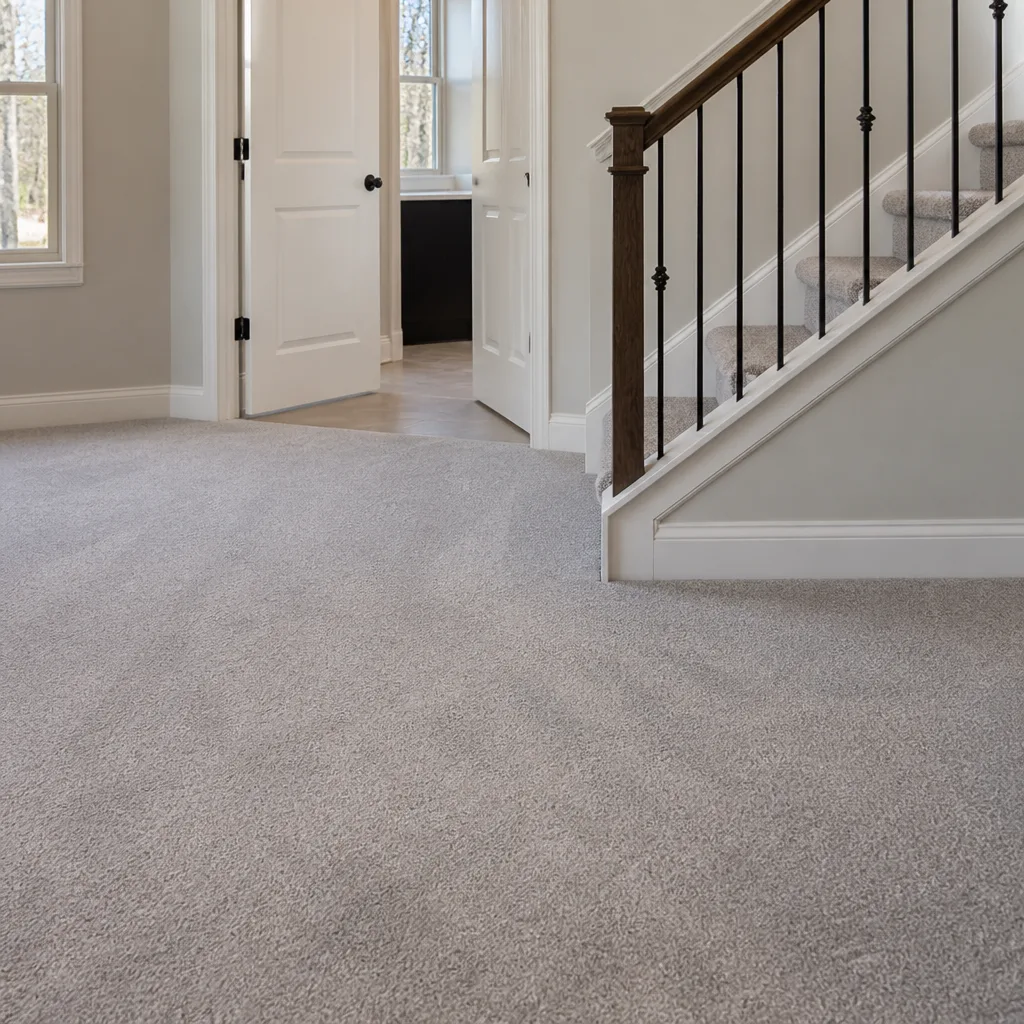 Carpet
 Shaw
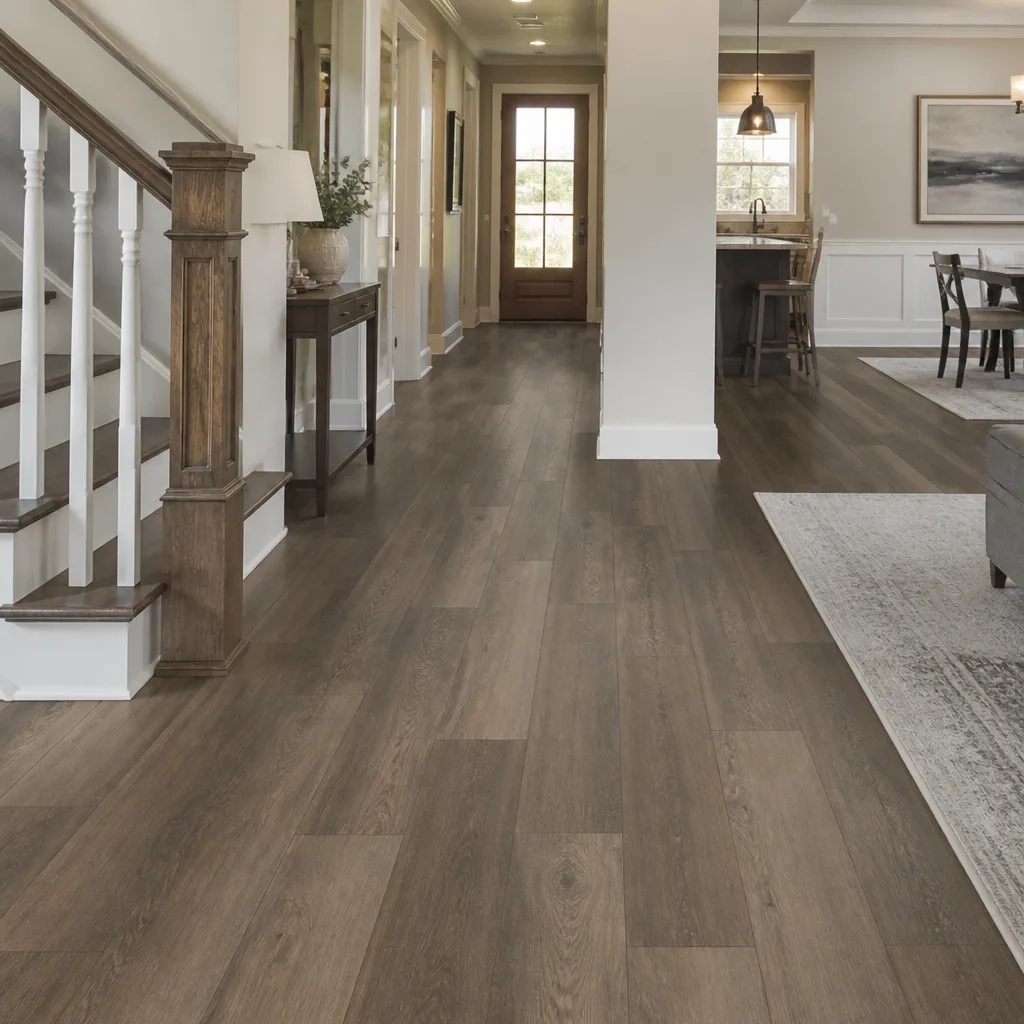 Mohawk
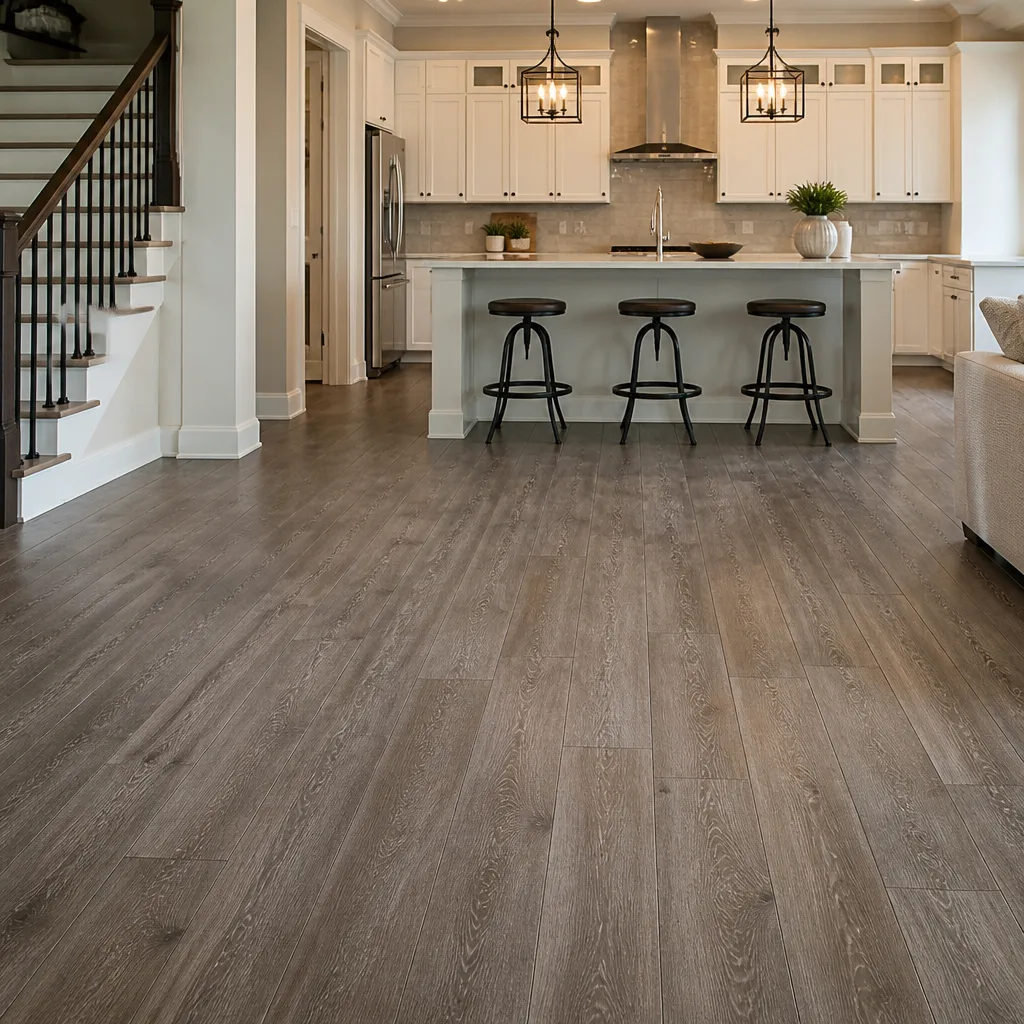 COREtec
 Pergo
Free in-home measure and written estimate: Shaw, Mohawk, COREtec and Pergo lines compared on your own rooms, with carpet, tile, vinyl plank, laminate and hardwood laid out side by side
Get your free estimateHow to Hire a Flooring Contractor in Enterprise: A Step-by-Step Guide
Most homeowners in Enterprise start the search for a flooring contractor the same way: they ask a few neighbors, then get three bids and pick the middle one. The bid is the thing everyone trusts. It has a brand name on it, a labor figure, and a signature at the bottom. What it usually doesn’t have is proof that the person holding it is actually licensed to do flooring work in Nevada. That’s the gap this guide closes. Below we walk through how to verify a Nevada C-16 flooring license, the exact questions that separate a flooring specialist from a handyman who added floors to his list, and how to read a warranty or a brand relationship for what it really tells you. Everything here is written for the way people hire in Enterprise, from shopping a first room to refinishing an older floor.
Quick Answer
To hire a flooring contractor in Enterprise, verify the contractor holds an active Nevada C-16 flooring license through the Nevada State Contractors Board before you sign anything, then confirm the license name matches the person and company on your bid. A C-16 license covers flooring installation and surfacing work, not plumbing, electrical or structural changes. Ask who measures, who installs and who signs the warranty, and choose a dedicated flooring specialist over a generalist who offers floors alongside a dozen other trades.
Styles & brands we work with
- Hardwood
- Engineered hardwood
- Luxury vinyl plank
- Laminate
- Porcelain tile
- Carpet
- Shaw
- Mohawk
- COREtec
- Pergo
Table of Contents
- How Do You Verify a Flooring Contractor’s License in Nevada?
- How Do You Tell a Flooring Specialist From a General Contractor?
- Why Does Installer Continuity Matter?
- What Should an Installation Warranty Actually Cover?
- How Do Brand Relationships Signal Trade Standing?
- How Should You Compare Flooring Bids in Enterprise?
- How Does the Local Climate Affect Flooring Choices?
- What Should the Measure-to-Install Process Look Like?
How Do You Verify a Flooring Contractor’s License in Nevada?
You verify a Nevada flooring contractor by pulling the license record through the Nevada State Contractors Board and confirming the name, number and classification match your bid exactly. Nevada classifies flooring work as a C-16 specialty license, which means the contractor is licensed specifically for flooring installation and related surface work rather than general building. That classification matters because it separates people who do floors for a living from people whose license covers something else entirely and who are working outside its scope.
What a C-16 license certifies is that the holder has met the state’s licensing requirements for the flooring trade and is accountable to the board for that work. What it does not certify is that the installer is good, that the product is right for your home, or that the company will show up on time. Licensing is the floor, not the ceiling. Think of it as the first box to check, not the last.
Here’s how to check it in practice:
- Pull the license number off your written estimate, not off a business card or a truck.
- Look up the number through the Nevada State Contractors Board and read the classification field.
- Confirm the license is active and that the name matches the company on your bid.
- Ask whether the person installing your floor is an employee or a subcontractor, and whose license covers them.
- Write the license number onto the contract before you sign.
A bid that comes from someone working under another person’s number is the one to watch. In our experience around Enterprise, this shows up most often with cash bids and with crews whose paperwork doesn’t match the company name on the estimate. If the license and the bid don’t line up, walk away. For the work itself, whether that’s carpet or tile flooring installation, the license should always match the company you’re hiring.
Why Does Installer Continuity Matter?
Installer continuity means the same company that measures your room is the company that sells you the floor and the company whose people install it. When those three steps are split across different businesses, the person who measured has no stake in whether the install goes right, and the installer has no relationship with the number you were quoted. Problems get handed back and forth, and you’re the one holding the phone.
The alternative is a fragmented job: a salesperson measures, a subcontractor arrives on install day, and the invoice lives in between. That structure isn’t automatically bad, but it puts the burden of coordination on you. You end up repeating details, watching for gaps between the measured square footage and the delivered material, and hoping nobody points at anyone else if the seams don’t land where they should.
When you’re evaluating contractors in Enterprise, ask these questions directly:
- Who measures the room, and does that person work for your company?
- Will the crew that installs my floor be your employees or a subcontracted team?
- Who do I call if a seam lifts six months in, and is that a different company?
- Does the person who wrote my estimate ever see the finished job?
You don’t need a dramatic answer to any of these. You need a clear one. A dedicated flooring specialist can usually tell you plainly who does the measurement, how the work is scheduled, and what happens if something goes wrong, because the whole process runs through one operation. A generalist who subcontracts every floor is often vaguer, and that vagueness is the signal. Detail is the difference between a company that owns the result and one that just passes the job along.
What Should an Installation Warranty Actually Cover?
An installation warranty should tell you in writing what the contractor is responsible for after the job is done, for how long, and what they’ll do about it. Look for a document that names the workmanship the company stands behind and separates that from the manufacturer’s product warranty, because those are two different promises. If a company hands you a single page that says “satisfaction guaranteed” and nothing else, you can’t tell what sits inside that promise.
The vague phrases are the ones to press on. “Satisfaction guaranteed” doesn’t say who decides what satisfaction means. “Lifetime warranty” on an installation usually turns out to be the manufacturer’s product coverage, not the installer’s work. Neither phrase commits anyone to fixing a hollow spot under a tile or a lifting seam along a wall.
Here’s what a readable installation warranty looks like:
- A clear statement of what’s covered, in plain terms, like workmanship on the install.
- A separate line for the product warranty, so you can see the two aren’t blended.
- A named way to report a problem, with a phone number and steps.
- What the remedy is: repair, replacement or refund of the install labor.
- What voids it: water damage, abuse, or work done on the flooring by someone else afterward.
Ask for the warranty in writing before you sign the estimate. If a company in Enterprise can’t show you one, that silence tells you something about how they’ll handle a callback. Brand warranties and install warranties should be given to you as documents, not as reassurances over the phone.
How Do You Tell a Flooring Specialist From a General Contractor?
A flooring specialist does flooring as their whole business: carpet, tile and hardwood refinishing, and nothing else. A general contractor does a long list of trades and adds floors to it. Both can hold licenses. Only one has built a business around getting a floor flat, laid correctly, and finished well, and the questions below surface the difference within a five-minute conversation.
The tell is in the specifics. A specialist can tell you how a particular floor handles a room that gets a lot of sun, or what changes when a customer has a dog and a wet-entry door. A generalist usually answers that question by naming a product and moving on. Neither answer is dishonest, but only the first one comes from doing flooring work repeatedly enough to have seen the outcomes.
Ask these questions and listen for precision:
- What percentage of your business is flooring? A specialist answers with the whole number.
- Which flooring types do you install, and which do you avoid? Vague answers mean they’ll try anything.
- Can you refinish hardwood, or do you only install new floors? Refinishing is a distinct skill set.
- How do you handle a floor that’s out of level? Specialists know exactly how they handle it.
- Who handles warranty callbacks, and are they the same people who installed it?
In our experience, the generalist isn’t a bad contractor. He’s just spread across too many trades to carry deep knowledge about any one of them, and flooring has real consequences when it’s done at the margins. When you’re weighing a specialist against a generalist in Enterprise, the questions above are the fastest way to see which one you’re talking to. Our own work is only flooring. Carpet, tile and hardwood, with the craft that comes from staying in one lane, covered from the first measure to the finished floor.
How Do Brand Relationships Signal Trade Standing?
Brand relationships tell you about a contractor’s standing in the trade, but only if you know what kind of relationship you’re looking at. There’s a large difference between a contractor who holds a retail purchasing account at a big-box store and one who has a direct relationship with the manufacturers whose products they install. The first means they can buy the product. The second means the manufacturer has vetted them for a program.
Ask the question directly: which brands are you authorized to install, and can you show it? A contractor working with established manufacturers can usually tell you which brand suits which room and why. When you’re comparing options like COREtec, Pergo, LifeProof or Mannington, that’s the conversation you want: which one fits the way you actually live, not which one happens to be stacked up most. At our company, the brand lineup covers Shaw, Mohawk, COREtec, Pergo, LifeProof, Mannington, Armstrong, Daltile and Karndean, and that variety is meant to let a customer compare real options in one place.
Two kinds of relationship matter:
- Authorized installation status, which means the manufacturer recognizes the contractor for their product.
- A working brand portfolio across carpet, tile and hardwood, so one company can advise on the whole home rather than a single surface.
When a contractor is strong in only one category, every conversation bends toward that category. A company with options across carpet, tile and hardwood can tell you which material actually fits a room. Water-resistant vinyl plank makes sense for a busy entry. Carpet makes sense where you want warmth underfoot. Hardwood in an older Enterprise home is often a refinishing job before it’s a replacement job. Restore before you replace is a real principle when the boards have enough life left in them, and it’s cheaper as well as more careful with what’s already there. If you want to see how that works for carpets in particular, take a look at our carpet installation page.
How Should You Compare Flooring Bids in Enterprise?
Compare flooring bids by lining up the scope, not the bottom-line number. A bid that’s $800 lower on paper often hides a thinner product, a smaller crew, or work that’s been left out and will be billed later as a change order. The only fair comparison is when each bid covers the same square footage, the same product, the same prep, and the same cleanup, so the numbers are talking about the same job.
Build a simple comparison before you choose:
- Square footage measured by the contractor, and whether waste allowance is included.
- Product name and grade, written exactly as the manufacturer labels it.
- What prep is included, and what would trigger an extra charge.
- Who removes the old floor and who hauls it away.
- Whether trim, baseboard and transitions are in the bid.
- Installation labor and whether it’s a fixed amount or an hourly rate.
- What the written warranty says, as a separate line.
Ask each contractor to put the same scope in writing, then compare row by row. When a bid is silent on a row, don’t assume it’s included. Assume it isn’t. The written estimate sets the final price, and a range given out loud is only a starting point before the measure. Our estimates are free, and the price is set per job by the written estimate once the room has been measured.
Another Enterprise-specific point: older housing stock often means a floor that sits at a slightly different height from the room next to it, or a surface that isn’t perfectly flat. That’s not a problem, but it’s prep work, and prep should be visible in the bid rather than appearing as a surprise on install day. If a contractor hands you a one-line number with no prep detail, ask what’s behind it.
How Does the Local Climate Affect Flooring Choices?
Enterprise sits in a high desert valley with a dry climate and big swings between daytime heat and cool nights. That matters to flooring because wood and wood-based products move with humidity, and the desert is not a uniform environment. A floor that sits near a door getting full afternoon sun is dealing with something different from a floor in a back bedroom, and the same goes for a room over a garage slab versus one over conditioned space. None of this is a reason to avoid a material. It’s a reason to have the conversation with someone who knows the local conditions.
What to ask a contractor here:
- How will the product handle a dry winter and a hot summer in this valley?
- What’s under the floor, and will that change the prep?
- Do we need a moisture check before the product goes down? (The answer is usually yes, and the specific reading depends on the product and the home.)
- Which areas of my home see the most sun and traffic, and does the product choice change for those?
Hardwood is where local conditions matter most, and where refinishing enters the picture. A hardwood floor in Enterprise that’s showing wear doesn’t automatically need replacing. Often the boards are thick enough to sand and refinish, restoring the surface without the cost of a full replacement. Whether your floor can be refinished depends on the thickness of the wood and its condition, and that’s checked at the estimate visit, not promised over the phone. If it turns out the floor can’t be refinished, you’ll hear that too, and separately.
No product is immune to the local climate, and no floor is waterproof in the absolute sense. Water-resistant vinyl plank, like COREtec or LifeProof, handles spills and damp feet well, but standing water and moisture from below still have to be dealt with. That’s a conversation about your home, not a line on a spec sheet.
What Should the Measure-to-Install Process Look Like?
A reputable flooring job follows a clear sequence: a free in-home measure and estimate, a written price, a booked install day. You should know at every step what happens next. The process is scheduled, not rushed, and if a contractor skips the measure and quotes from a photo or an address, you can’t trust the number. Square footage guessed is square footage that gets corrected upward later.
Here’s what a normal process looks like in Enterprise:
- You call and describe the room or rooms. The contractor books a free measure.
- At the visit, the room is measured, the existing floor is inspected, and the product options are discussed in person.
- You receive a written estimate with the scope, the product and the price on it.
- You choose a product and a date, and the install goes on the schedule.
- On install day, the crew arrives, the prep is done, the floor goes down, and the old material is handled as agreed.
- You walk the finished job with the contractor before the bill is settled.
For a single room, the schedule is usually straightforward. For a whole home across carpet, tile and hardwood, the same process scales, and the advantage of a single flooring specialist is that you’re not coordinating a carpet crew, a tile setter and a refinisher as separate contractors. If your project crosses several rooms or several surfaces, look at how we work on the main Floors Enterprise page, and if you’re just getting started on the search, our Enterprise page is the place to begin.
One thing you won’t see on a good process: a promise that the job will be done tomorrow. Flooring installation is a scheduled job with a measured plan behind it. If someone is telling you they can install a whole room with no measure and no written price, that’s a sign to slow down, not speed up.
See the difference
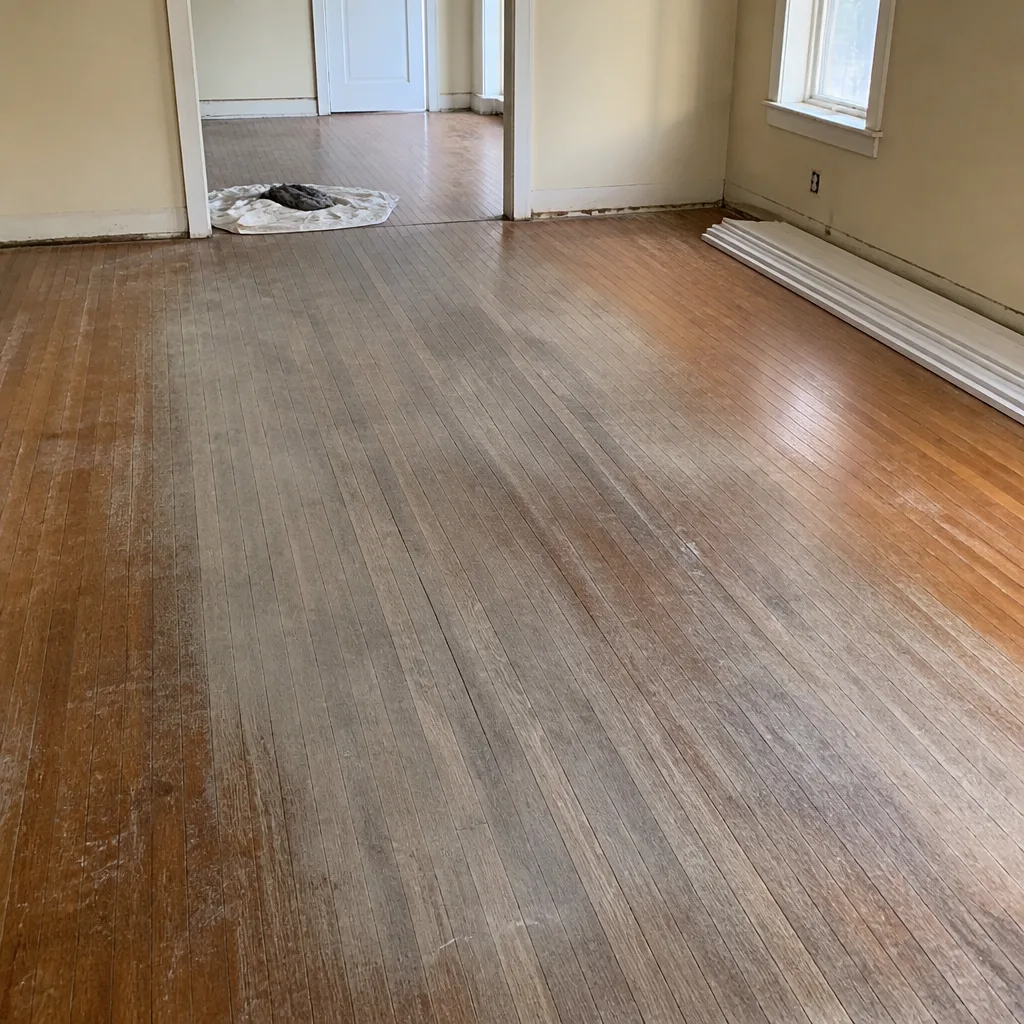 Before
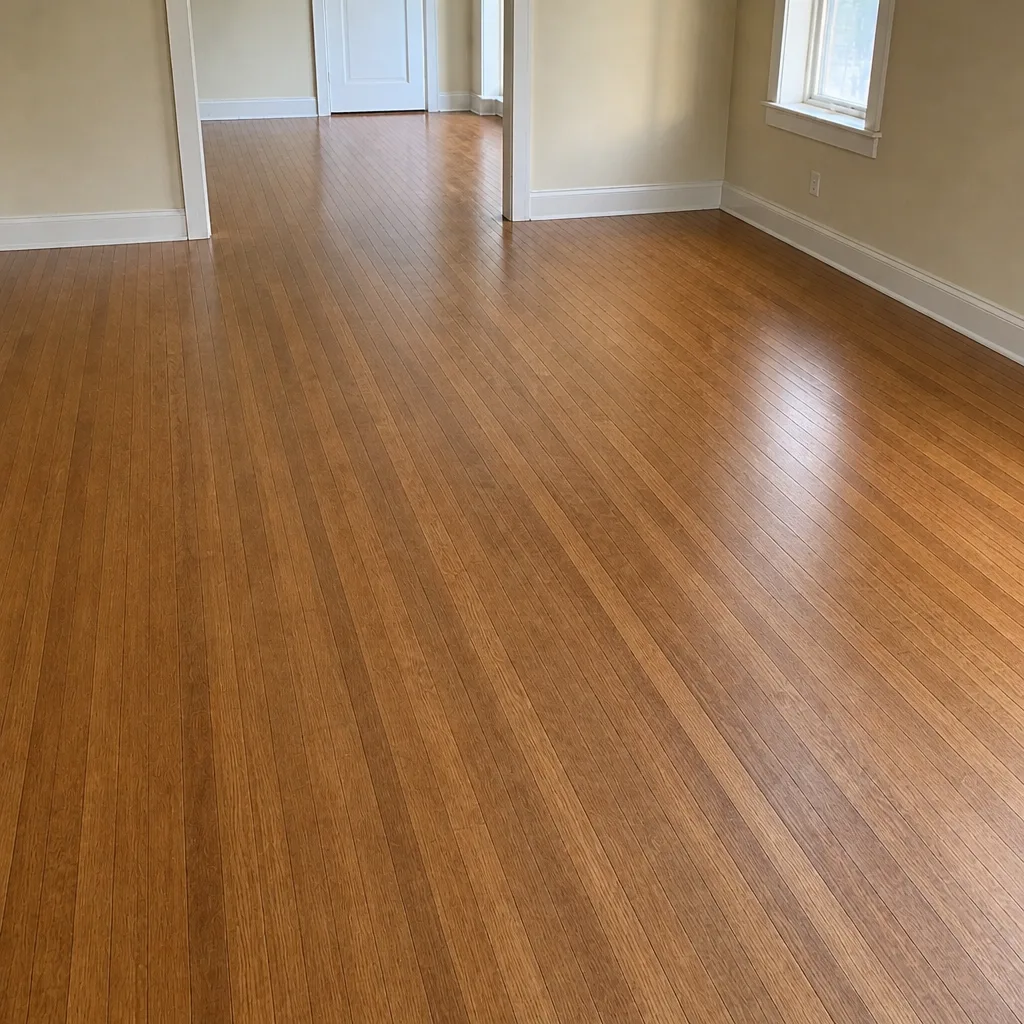 After
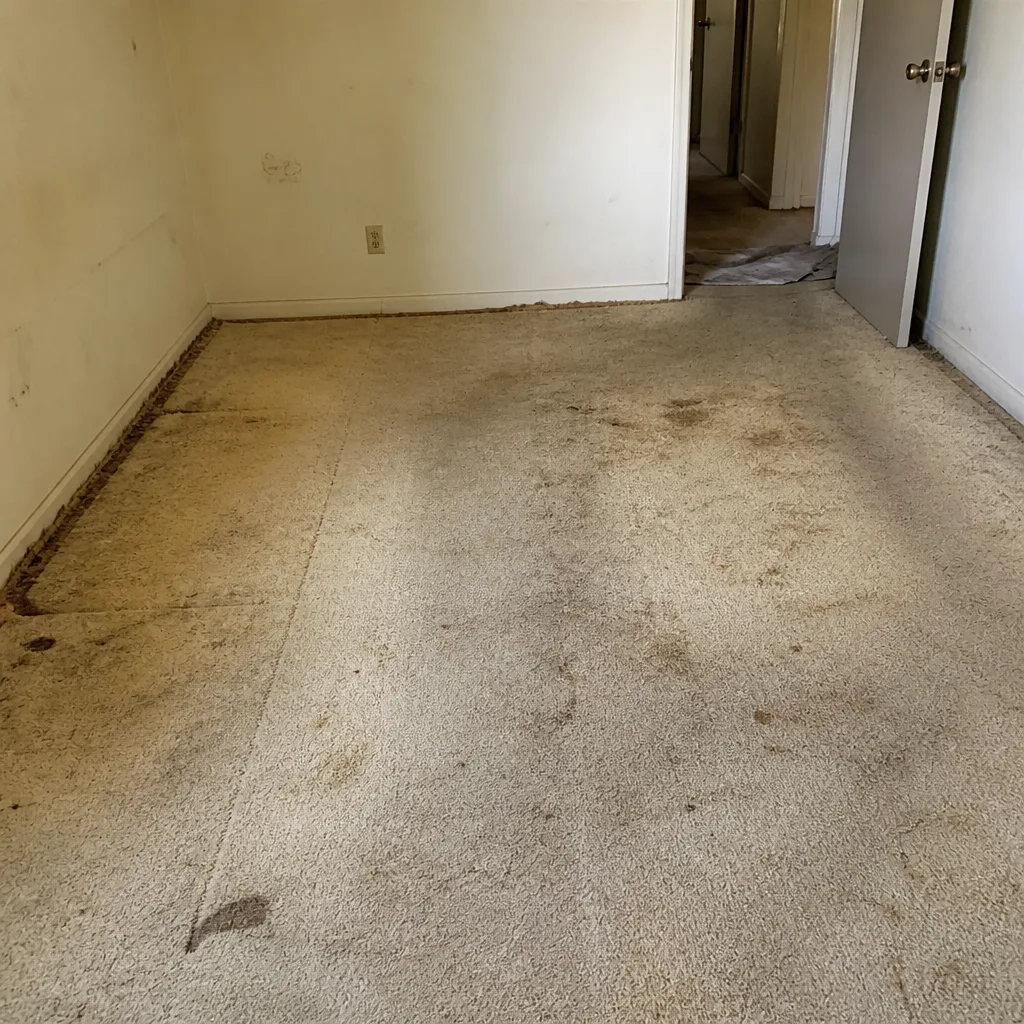 Before
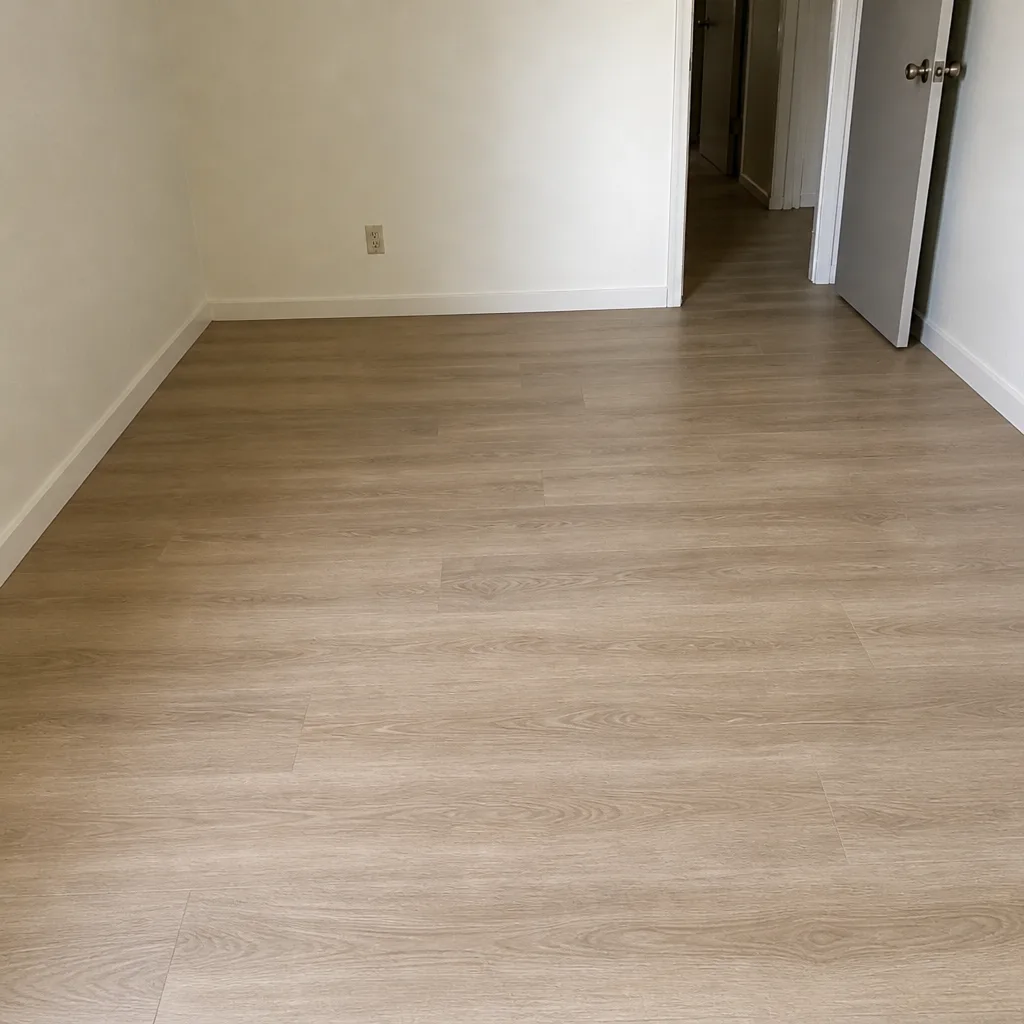 After
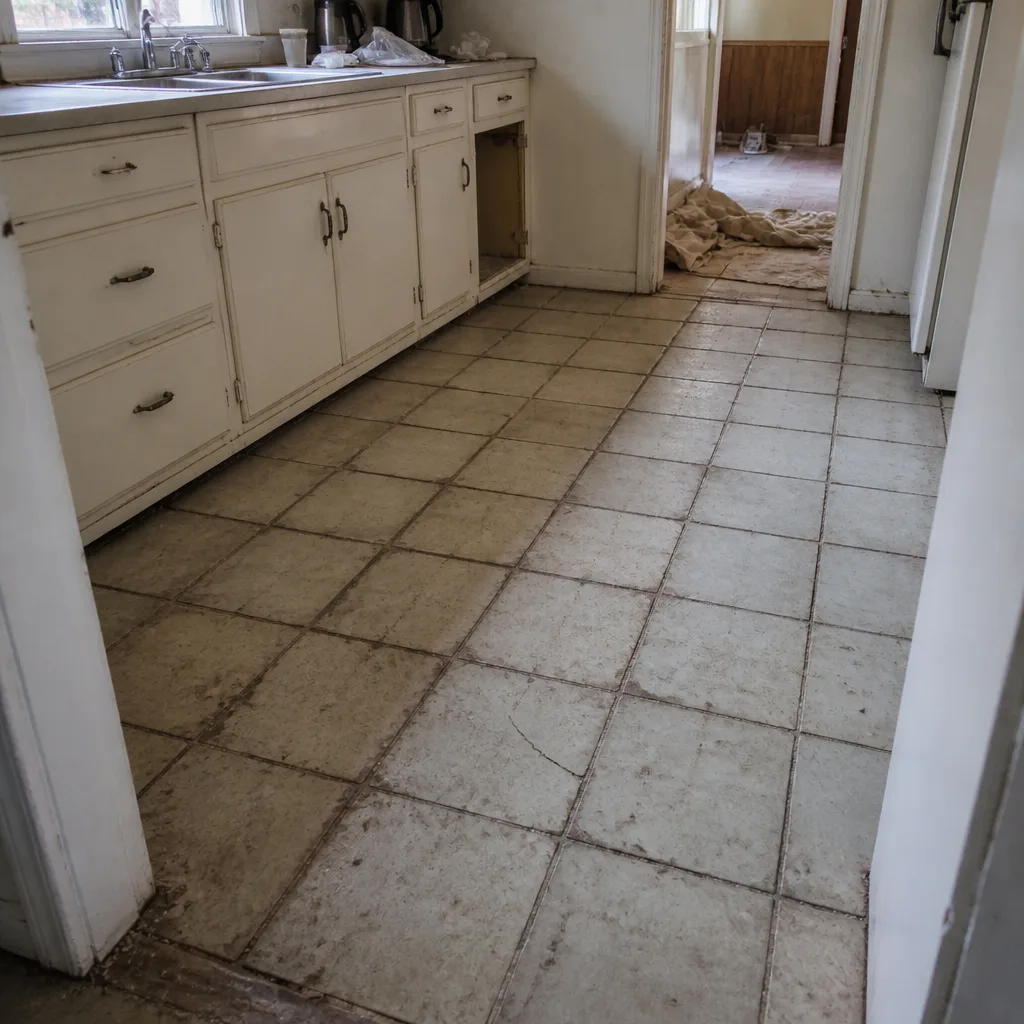 Before
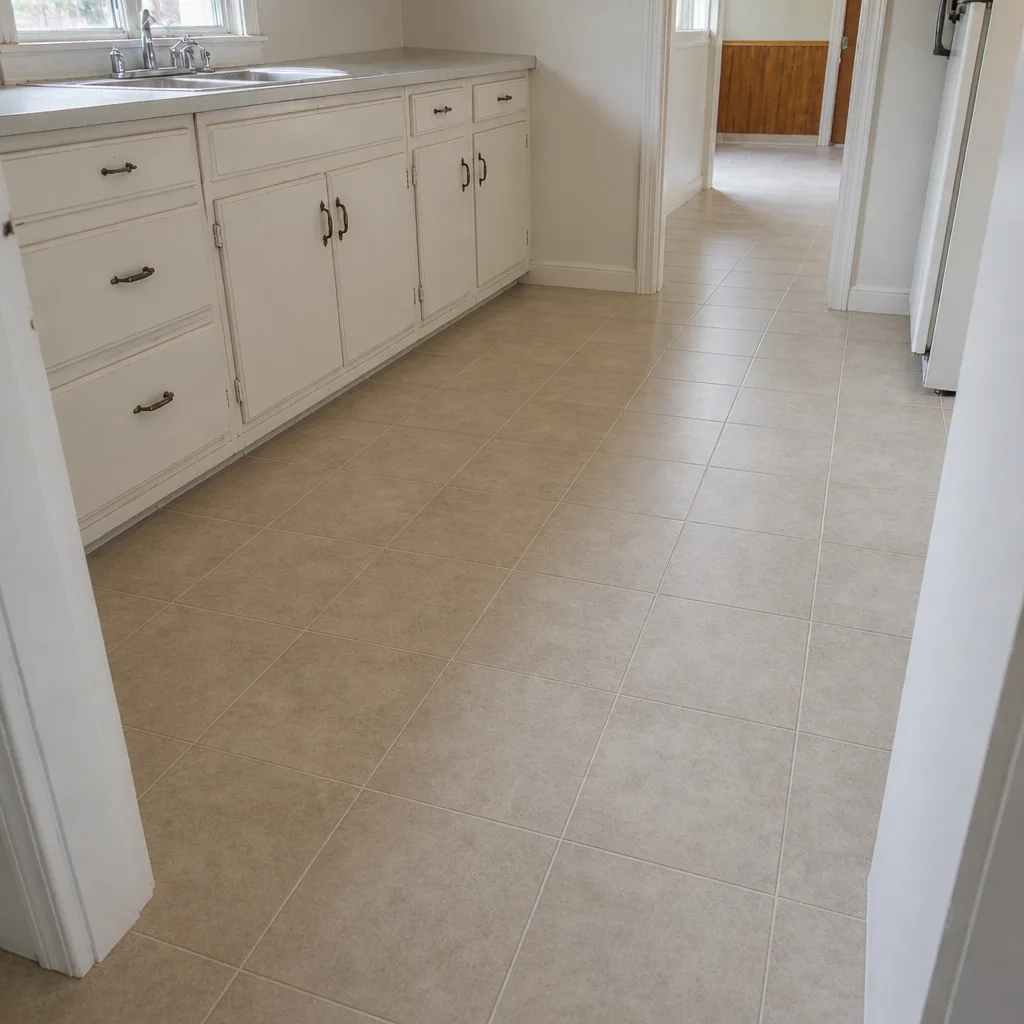 After
Common Mistakes to Avoid
- Hiring without checking the license. Ask for the C-16 license number and confirm it matches the bid. A bid signed by someone working under another person’s number is the fastest way to end up with no one accountable.
- Treating the lowest bid as the best bid. A lower number usually means thinner product, less prep or work left out of the scope. Compare the bids row by row before you compare the totals.
- Assuming a “satisfaction guarantee” means something. It doesn’t unless it says what’s covered, for how long and who fixes it. Get the installation warranty in writing.
- Skipping the measure. A quote over the phone from rough dimensions is a guess. The only trustworthy number follows a measure in the room.
- Not asking who installs the floor. If the salesperson and the installer are different companies, you need to know who handles a callback. Continuity prevents the hand-off problem.
- Choosing a floor for the photo instead of the room. In Enterprise’s dry valley climate, sun exposure and slab conditions matter as much as the plank’s look. Talk through the room before the product.
- Signing before the scope is written. If the estimate doesn’t name prep, trim, removal and cleanup, those items can become a change order after you’ve committed.
When to Call a Professional
Call a professional flooring contractor in Enterprise when the job involves more than a single loose tile and you want it done right. That includes a room where the existing floor is lifting at a seam, a tile floor with hollow spots or cracked grout, a carpet that’s been through years of foot traffic, or a hardwood floor that’s been sanded before and may or may not have another pass in it. Those are judgment calls, not just labor. Refinishing hardwood, setting tile over an out-of-level surface and choosing a floor for a room with direct sun all need an in-person look. Floors Enterprise offers free estimates in Enterprise. Call (844) 320-5894 to schedule yours. We answer 24/7, and fast dispatch from 7am to 7pm runs Sunday through Friday.
Frequently Asked Questions
There’s no single figure because cost depends on the product, the square footage and the prep the room needs. The written estimate is the price, and it’s set per job after a measure. Call (844) 320-5894 for a free estimate, and you’ll get a figure tied to your actual room rather than a guess from a phone call.
A flooring contractor in Nevada should hold a C-16 flooring classification from the Nevada State Contractors Board. That license covers flooring installation and related surface work, not general building. Always confirm the license number, name and classification match your bid before you sign, and get your own copy of the number for your records.
Yes. The in-home measure and the written estimate are free. Price is set per job by that written estimate, so the number you see after the measure is the one that applies. Call (844) 320-5894 to book your free estimate.
The schedule is set at the estimate, once the room and the product are known. Install timelines depend on square footage, prep and the material you choose, and we’ll tell you what to expect before you commit. Call (844) 320-5894 and we’ll walk through your project and give you a realistic date.
Sometimes yes, sometimes no, and the answer depends on the thickness of the wood and its condition. A floor with enough material left can often be sanded and refinished, which restores the surface and saves the cost of a full replacement. We check that at the estimate visit rather than promising it over the phone.
We work with nine brands, including Shaw, Mohawk, COREtec, Pergo, LifeProof, Mannington, Armstrong, Daltile and Karndean. That range lets you compare in one conversation across carpet, tile and hardwood. Call (844) 320-5894 and we’ll talk through which fits your rooms, now and later.
No. Flooring is a scheduled job with a measure and a written estimate first. We answer 24/7 at (844) 320-5894, and fast dispatch from 7am to 7pm runs Sunday through Friday, but the installation date is booked from the schedule, not promised on a phone call.
The Bottom Line
Hiring a flooring contractor in Enterprise comes down to a few concrete checks. Verify the C-16 license and make sure it matches your bid. Ask who measures, who installs and who backs the warranty. Read the warranty for what it actually covers, not for the phrase at the top. Compare bids on scope rather than totals. And pick a company whose whole business is flooring, so the person advising you on the product is also invested in how it’s installed. Nine brands, one specialist, and a free measure are all a call away. When you’re ready, call (844) 320-5894 to schedule your free estimate.
Written by the team at Floors Enterprise.